#5 OF 28 IN PHYSICS
Ray Optics and Optical Instruments JEE Main PYQs (2013–2026) with answers
225 questions across 11 JEE Main years, about 1 a paper (≈5 marks). The topics asked most are Experimental skills in ray optics and Refraction by lenses and optical combinations.
- 91% of papers
- ≈5 marks a paper
- Class 12 · Ch 9
From official NTA papers · Updated 9 Nov 2026
What's asked most
- Experimental skills in ray optics21%Measure focal length of convex and concave mirrors and a convex lens by parallax · Measure focal length of a concave mirror and convex lens by the u-v method
- Refraction by lenses and optical combinations16%Combination of thin lenses in contact · Cutting of lenses
- Refraction at plane surfaces and total internal reflection16%Critical angle, total internal reflection and applications · Total internal reflection in nature and technology
- Reflection of light and spherical mirrors15%Mirror equation and graphs · Mirror magnification and image nature
- Prisms, deviation and dispersion14%Ray path through a prism and deviation · Minimum deviation and refractive index of a prism
See all 7 topics
- Optical instruments9%Simple and compound microscopes and their magnifying powers · Astronomical telescopes, reflecting and refracting, and their magnifying powers
- Refraction at spherical surfaces9%Refraction at single and double spherical surfaces · Linear magnification at a spherical refracting surface
How often it comes
See as a table
| Year | Questions |
|---|---|
| 2026 | 34 |
| 2025 | 30 |
| 2024 | 20 |
| 2023 | 28 |
| 2022 | 28 |
| 2021 | 31 |
| 2020 | 17 |
| 2019 | 24 |
| 2018 | 3 |
| 2017 | 2 |
| 2016 | 5 |
| 2015 | 2 |
| 2013 | 1 |
Where it fits
SYLLABUSJEE Main Physics syllabusWEIGHTAGE#5 of 28 Physics chaptersNCERTClass 12 Physics NCERT, Chapter 9
Questions here often join up with

All 225 questions
- Q1JEE Main 2026 · 28 Jan · Shift 2For a transparent prism, if the angle of minimum deviation is equal to its refracting angle, the refractive index of the prism satisfies.Tap an option to check.
Show answer
Correct answer: option 3, - Q2JEE Main 2026 · 22 Jan · Shift 1A thin convex lens of focal length and a thin concave lens of focal length are combined together (without any gap) and this combination has magnification when an object is placed before the convex lens. Keeping the positions of convex lens and object undisturbed a gap of is introduced between the lenses by moving the concave lens away, which lead to a change in magnification of total lens system to . The value of is
- Q3JEE Main 2026 · 24 Jan · Shift 1The exit surface of a prism with refractive index coated with a material having refractive index . When this prism is set for minimum angle of deviation, it exactly meets the condition of critical angle. The prism angle is ____.Tap an option to check.
Show answer
Correct answer: option 1, - Q4JEE Main 2026 · 23 Jan · Shift 1Consider light travelling from a medium to medium separated by a plane interface. If the light undergoes total internal reflection during its travel from medium to and the speed of light in media and are and , respectively, then the value of critical angle is:Tap an option to check.
Show answer
Correct answer: option 1, - Q5JEE Main 2026 · 8 Apr · Shift 2A thin biconvex lens is prepared from the glass both curved surfaces of which have equal radii of each. Left side surface of the lens is silvered from outside to make it reflecting. To have the position of image and object at the same place, the object should be placed, from the lens at a distance of ________ .Tap an option to check.
Show answer
Correct answer: option 1, - Q6JEE Main 2026 · 22 Jan · Shift 1Consider an equilateral prism (refractive index ). A ray of light is incident on its one surface at a certain angle . If the emergent ray is found to graze along the other surface then the angle of refraction at the incident surface is close to _____.Tap an option to check.
Show answer
Correct answer: option 4, - Q7JEE Main 2026 · 24 Jan · Shift 2Distance between an object and three times magnified real image is . The focal length of the mirror used is .Tap an option to check.
Show answer
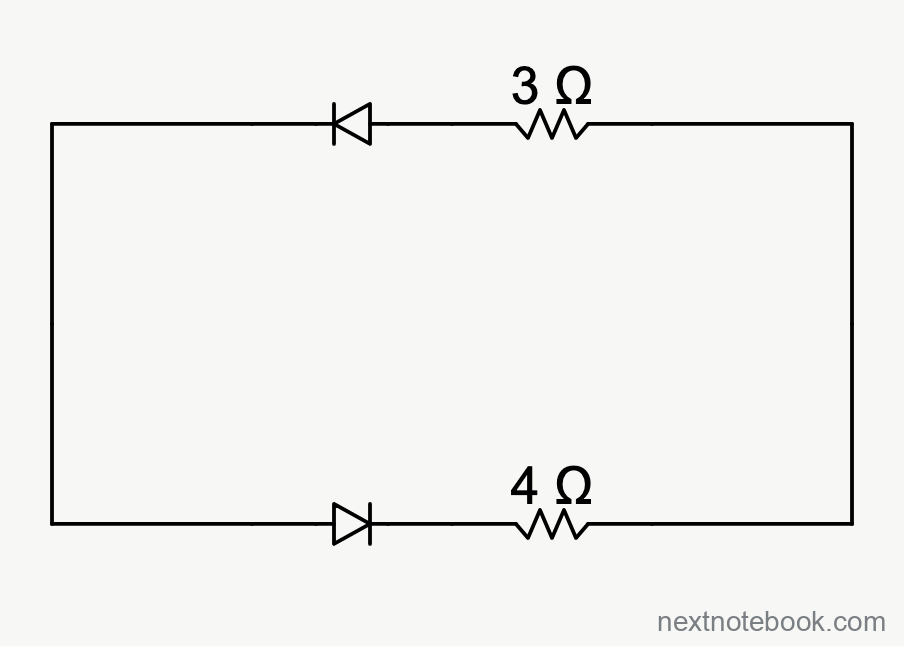
Correct answer: option 2, - Q8JEE Main 2026 · 21 Jan · Shift 2As shown in the diagram, when the incident ray is parallel to base of the prism, the emergent ray grazes along the second surface. If refractive index of the material of prism is , the angle of prism is.
 Tap an option to check.
Show answer
Correct answer: option 1, - Q9JEE Main 2026 · 22 Jan · Shift 2In parallax method for the determination of focal length of a concave mirror, the object should always be placed:Tap an option to check.
Show answer
Correct answer: option 1,at any point beyond the focus of the mirror - Q10JEE Main 2026 · 23 Jan · Shift 2A prism of angle and refractive index is coated with thin film of refractive index only at the back exposed surface. To have total internal reflection at the back exposed surface the incident angle must be ____. andTap an option to check.
Show answer
Correct answer: option 4,
Show the other 50 questions
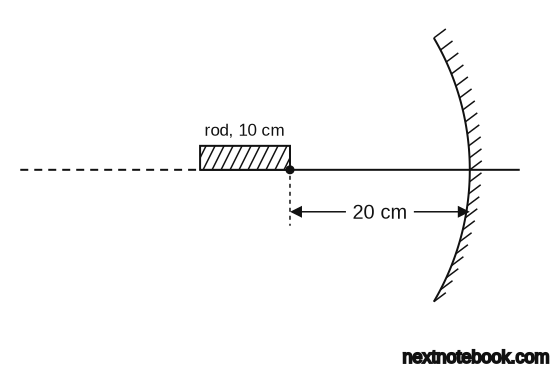
- Q11JEE Main 2026 · 4 Apr · Shift 1A rod of length lies along the principle axis of a concave mirror of focal length as shown in figure. The length of the image is ________ .
 Tap an option to check.
Show answer
Correct answer: option 2, - Q12JEE Main 2026 · 5 Apr · Shift 2A thin convex lens and a thin concave lens are kept in contact and are co-axial. Which of the following statements is correct for this combination of two lenses?Tap an option to check.
Show answer
Correct answer: option 1,behaves as concave lens if - Q13JEE Main 2026 · 2 Apr · Shift 1For a thin symmetric prism made of glass (refractive index ), the ratio of incident angle and minimum deviation will be ________.Tap an option to check.
Show answer
Correct answer: option 2, - Q14JEE Main 2026 · 5 Apr · Shift 1A ray of light passing through an equilateral prism is having velocity in the prism material, then the minimum angle of deviation is _____ degrees.Tap an option to check.
Show answer
Correct answer: option 2,30 - Q15JEE Main 2026 · 24 Jan · Shift 1In a microscope of tube length two convex lenses are arranged with focal length of and . Total magnification obtained with this system for normal adjustment is . The value of is ____.Tap an option to check.
Show answer
Correct answer: option 3,2 - Q16JEE Main 2026 · 24 Jan · Shift 2Five persons , , , and recorded object distance and image distance using same convex lens having power as , , , and respectively. Identify correct statementTap an option to check.
Show answer
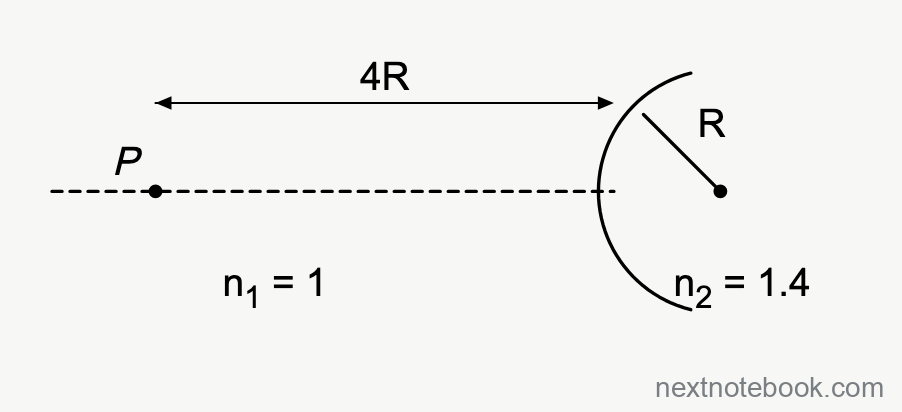
Correct answer: option 1,Readings recorded by person are incorrect - Q17JEE Main 2026 · 6 Apr · Shift 1A spherical interface lens of radius separates two media of refractive indices and respectively as shown in the figure below. A point source is placed at a distance of in front of spherical interface. The magnitude of the magnification of point source image is ________.
 Tap an option to check.
Show answer
Correct answer: option 1, - Q18JEE Main 2026 · 2 Apr · Shift 2One side of an equilateral prism is painted by a transparent material of refractive index . The refractive index of prism is . The minimum value of required for total internal reflection from painted face is __________.Tap an option to check.
Show answer
Correct answer: option 4, - Q19JEE Main 2026 · 5 Apr · Shift 2An object is placed on the left of a convex lens of focal length . Another convex lens is now placed right of lens . If the focal length of lens is , the final image is __________.Tap an option to check.
Show answer
Correct answer: option 2,real, formed at right of lens , with a size same as that of - Q20JEE Main 2026 · 2 Apr · Shift 1Refer the figure given below. and are refractive indices of air and lens material. The height of image will be ________ .Tap an option to check.
Show answer
Correct answer: option 1,1 - Stuck on one?Log in free
See the step-by-step solution and video for every question, free with login.
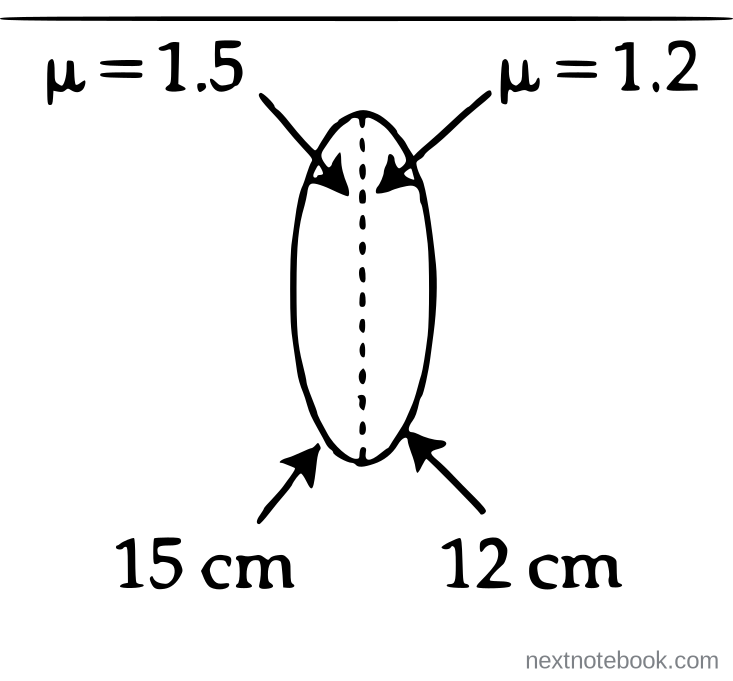
- Q21JEE Main 2026 · 28 Jan · Shift 2A biconvex lens is formed by using two thin planoconvex lenses, as shown in the figure. The refractive index and radius of curved surfaces are also mentioned in figure. When an object is placed on the left side of lens at a distance of from the biconvex lens, the magnification of the image will be:
 Tap an option to check.
Show answer
Correct answer: option 3, - Q22JEE Main 2026 · 4 Apr · Shift 2A convex lens is made from glass material having refractive index of with same radius of curvature on both sides. The ratio of its focal length and radius of curvature is ________.Tap an option to check.
Show answer
Correct answer: option 4, - Q23JEE Main 2026 · 8 Apr · Shift 2Light ray incident along a vector emerges out along vector as shown in the figure below. The value of is ________.Tap an option to check.
Show answer
Correct answer: option 1,1.6 - Q24JEE Main 2026 · 5 Apr · Shift 1A compound microscope is designed with two symmetric biconvex lenses. The objective lens is cut vertically, creating two identical plano-convex lenses. One of them is used in place of original objective lens. To retain same magnification keeping the object distance unchanged, the tube length has to beTap an option to check.
Show answer
Correct answer: option 1,increased two times - Q25JEE Main 2026 · 6 Apr · Shift 2Angle of minimum deviation is equal to the half of the angle of prism in an equilateral prism. The refractive index of the prism is ________.Tap an option to check.
Show answer
Correct answer: option 3, - Q26JEE Main 2026 · 28 Jan · Shift 1The magnitudes of power of a biconvex lens (refractive index ) and that of a plano-concave lens (refractive index ) are same. If the curvature of plano-concave lens exactly matches with the curvature of back surface of the biconvex lens, then ratio of radius of curvature of front and back surface of the biconvex lens isTap an option to check.
Show answer
Correct answer: option 2, - Q27JEE Main 2026 · 23 Jan · Shift 1A thin prism with angle of refractive index is combined with another prism of refractive index to produce dispersion without deviation. The angle of second prism is ____.Tap an option to check.
Show answer
Correct answer: option 1, - Q28JEE Main 2026 · 22 Jan · Shift 1A parallel beam of light travelling in air (refractive index ) is incident on a convex spherical glass surface of radius of curvature . Refractive index of glass is . The rays converge to a point at a distance from the centre of the curvature of the spherical surface. The value of is _____ .Tap Show answer to check.
Show answer
Answer: 100 - Q29JEE Main 2026 · 28 Jan · Shift 1A convex lens of refractive index and focal length is immersed in water. The difference in focal lengths of the given lens when it is in water and in air is . The value of is _____. (Refractive index of water )Tap Show answer to check.
Show answer
Answer: 3 - Q30JEE Main 2026 · 21 Jan · Shift 1A collimated beam of light of diameter is propagating along the -axis. The beam is required to be expanded into a collimated beam of diameter using a system of two convex lenses. If the first lens has focal length , then the focal length of the second lens is _____ mm.Tap Show answer to check.
Show answer
Answer: 280 - Stuck on one?Log in free
See the step-by-step solution and video for every question, free with login.
- Q31JEE Main 2026 · 23 Jan · Shift 2The size of the images of an object, formed by a thin lens, are equal when the object is placed at two different positions and from the lens. The focal length of the lens is __________ .Tap Show answer to check.
Show answer
Answer: 16 - Q32JEE Main 2026 · 2 Apr · Shift 2If sunlight is focused on a paper using convex lens, it starts burning the paper in shortest time when the lens is kept at above the paper. If the radius of curvature of the lens is then the refractive index of the lens material is . The value of is __________.Tap Show answer to check.
Show answer
Answer: 20 - Q33JEE Main 2026 · 21 Jan · Shift 1In a microscope the objective is having focal length and eye-piece is having focal length . The tube length is . The magnification produced by this microscope for normal adjustment is ____.Tap Show answer to check.
Show answer
Answer: 100 - Q34JEE Main 2026 · 6 Apr · Shift 2A concave mirror of focal length forms an image which is double the size of object when the object is placed at two different positions. The distance between the two positions of the object is __________ .Tap Show answer to check.
Show answer
Answer: 10 - Q35JEE Main 2025 · 7 Apr · Shift 1Two thin convex lenses of focal lengths and are placed coaxially, apart. The power of this combination is:Tap an option to check.
Show answer
Correct answer: option 2, - Q36JEE Main 2025 · 2 Apr · Shift 2Two identical objects are placed in front of convex mirror and concave mirror having same radii of curvature of , at same distance of from the respective mirrors. The ratio of sizes of the images formed by convex mirror and by concave mirror is:Tap an option to check.
Show answer
Correct answer: option 2, - Q37JEE Main 2025 · 2 Apr · Shift 2A bi-convex lens has radius of curvature of both the surfaces same as cm. If this lens is required to be replaced by another convex lens having different radii of curvatures on both sides (), without any change in lens power then possible combination of and is:Tap an option to check.
Show answer
Correct answer: option 3,cm and cm - Q38JEE Main 2025 · 4 Apr · Shift 2A finite size object is placed normal to the principal axis at a distance of from a convex mirror of focal length . A plane mirror is now placed in such a way that the image produced by both the mirrors coincide with each other. The distance between the two mirrors is:Tap an option to check.
Show answer
Correct answer: option 2, - Q39JEE Main 2025 · 7 Apr · Shift 2A mirror is used to produce an image with magnification of . If the distance between object and its image is 40 cm, then the focal length of the mirror is __________.Tap an option to check.
Show answer
Correct answer: option 2,10.7 cm - Q40JEE Main 2025 · 23 Jan · Shift 1Given a thin convex lens (refractive index μ2), kept in a liquid (refractive index μ1, μ1<μ2) having radii of curvatures |R1| and |R2|. Its second surface is silver polished. Where should an object be placed on the optic axis so that a real and inverted image is formed at the same place?Tap an option to check.
Show answer
Correct answer: option 4,(μ1|R1|·|R2|)/(μ2(|R1|+|R2|)−μ1|R2|) - Stuck on one?Log in free
See the step-by-step solution and video for every question, free with login.
- Q41JEE Main 2025 · 23 Jan · Shift 2The refractive index of the material of a glass prism is . The angle of minimum deviation is equal to the angle of the prism. What is the angle of the prism?Tap an option to check.
Show answer
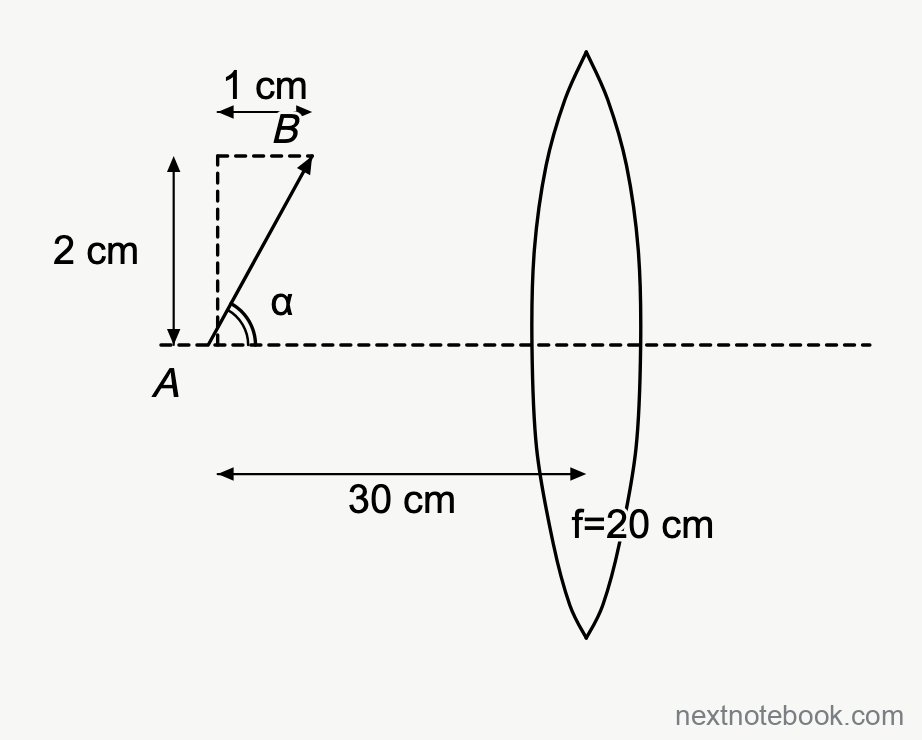
Correct answer: option 3,60° - Q42JEE Main 2025 · 2 Apr · Shift 1A slanted object AB is placed on one side of convex lens as shown in the diagram. The image is formed on the opposite side. Angle made by the image with principal axis is:
 Tap an option to check.
Show answer
Correct answer: option 4, - Q43JEE Main 2025 · 3 Apr · Shift 1Consider following statements for refraction of light through prism, when angle of deviation is minimum. A. The refracted ray inside prism becomes parallel to the base. B. Larger angle prisms provide smaller angle of minimum deviation. C. Angle of incidence and angle of emergence becomes equal. D. There are always two sets of angle of incidence for which deviation will be same except at minimum deviation setting. E. Angle of refraction becomes double of prism angle. Choose the correct answer from the options given below:Tap an option to check.
Show answer
Correct answer: option 1,A, C and D Only - Q44JEE Main 2025 · 28 Jan · Shift 2In a long glass tube, mixture of two liquids and with refractive indices and respectively, forms a convex refractive meniscus towards . If an object placed at from the vertex of the meniscus in forms an image with a magnification of ‘’ then the radius of curvature of meniscus is:Tap an option to check.
Show answer
Correct answer: option 2, - Q45JEE Main 2025 · 24 Jan · Shift 1What is the relative decrease in focal length of a lens for an increase in optical power by from ? ['D' stands for dioptre]Tap an option to check.
Show answer
Correct answer: option 3, - Q46JEE Main 2025 · 24 Jan · Shift 2A photograph of a landscape is captured by a drone camera at a height of . The size of the camera film is and the area of the landscape photographed is . The focal length of the lens in the drone camera is:Tap an option to check.
Show answer
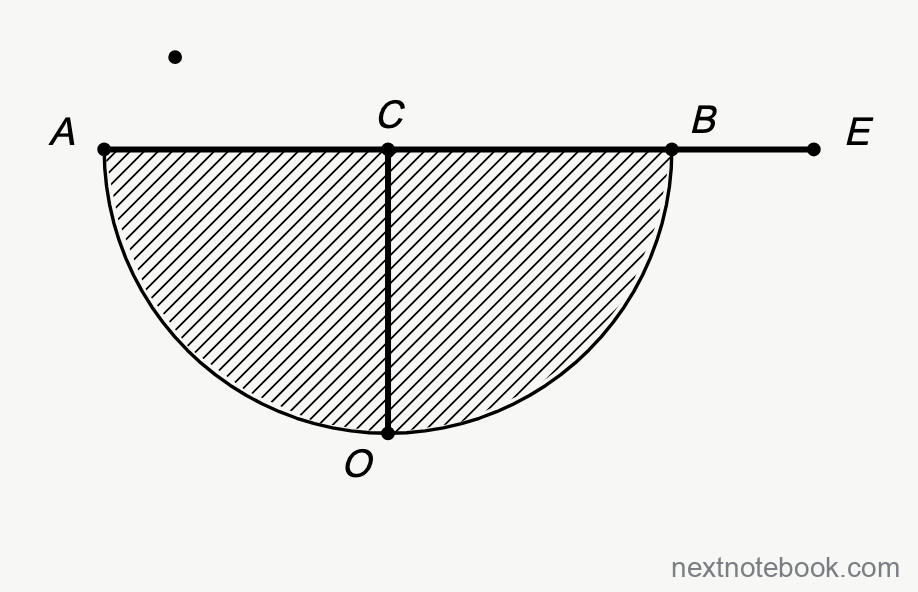
Correct answer: option 3, - Q47JEE Main 2025 · 28 Jan · Shift 1A hemispherical vessel is completely filled with a liquid of refractive index . A small coin is kept at the lowest point (O) of the vessel as shown in figure. The minimum value of the refractive index of the liquid so that a person can see the coin from point E (at the level of the vessel) is _____.
 Tap an option to check.
Show answer
Correct answer: option 2, - Q48JEE Main 2025 · 8 Apr · Shift 2A concave-convex lens of refractive index and the radii of curvature of its surfaces are and , respectively. The concave surface is upwards and is filled with a liquid of refractive index . The focal length of the liquid–glass combination will beTap an option to check.
Show answer
Correct answer: option 1, - Q49JEE Main 2025 · 7 Apr · Shift 2Given below are two statements: one is labelled as Assertion (A) and the other is labelled as Reason (R).
Assertion (A): Refractive index of glass is higher than that of air.
Reason (R): Optical density of a medium is directly proportionate to its mass density which results in a proportionate refractive index.
In the light of the above statements, choose the most appropriate answer from the options given below:Tap an option to check.Show answer
Correct answer: option 3,(A) is correct but (R) is not correct - Q50JEE Main 2025 · 23 Jan · Shift 1What is the lateral shift of a ray refracted through a parallel-sided glass slab of thickness ‘h’ in terms of the angle of incidence ‘i’ and angle of refraction ‘r’, if the glass slab is placed in air medium?Tap an option to check.
Show answer
Correct answer: option 4,(h sin(i−r))/(cos r) - Stuck on one?Log in free
See the step-by-step solution and video for every question, free with login.
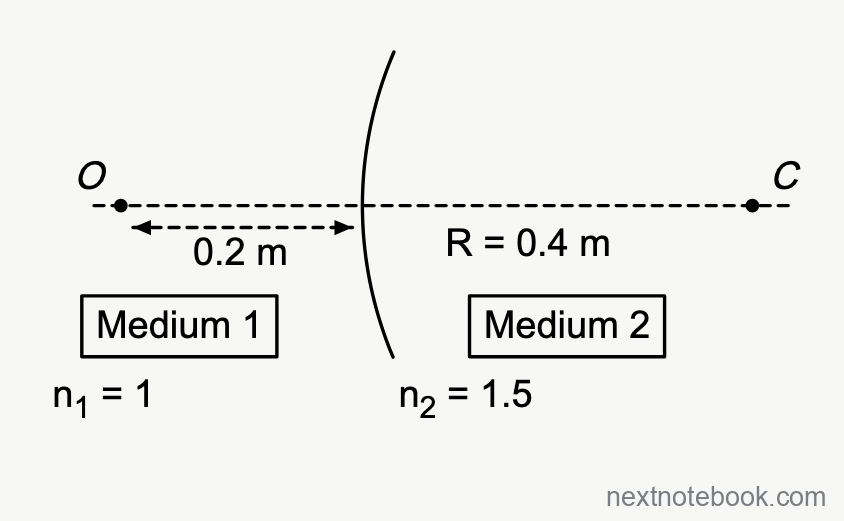
- Q51JEE Main 2025 · 2 Apr · Shift 1A spherical surface separates two media of refractive indices 1 and 1.5 as shown in figure. Distance of the image of an object ‘’, is: ( is the center of curvature of the spherical surface and is the radius of curvature)
 Tap an option to check.
Show answer
Correct answer: option 1,left to the spherical surface - Q52JEE Main 2025 · 3 Apr · Shift 1The radii of curvature for a thin convex lens are 10 cm and 15 cm respectively. The focal length of the lens is 12 cm. The refractive index of the lens material isTap an option to check.
Show answer
Correct answer: option 4,1.5 - Q53JEE Main 2025 · 28 Jan · Shift 2A concave mirror produces an image of an object such that the distance between the object and image is . If the magnification of the image is ‘’, then the magnitude of the radius of curvature of the mirror is:Tap an option to check.
Show answer
Correct answer: option 3, - Q54JEE Main 2025 · 24 Jan · Shift 1A plano-convex lens having radius of curvature of first surface exhibits focal length of in air. Another plano-convex lens with first surface radius of curvature has focal length of when it is immersed in a liquid of refractive index . If both the lenses are made of same glass of refractive index , the ratio of and will beTap an option to check.
Show answer
Correct answer: option 4, - Q55JEE Main 2025 · 28 Jan · Shift 1A thin prism with angle made of glass having refractive index , is combined with another thin prism made of glass having refractive index to get dispersion without deviation. The angle of the prism in degrees isTap an option to check.
Show answer
Correct answer: option 1, - Q56JEE Main 2025 · 7 Apr · Shift 1A lens having refractive index has focal length of , when it is in air. Find the focal length of the lens when it is placed in water. (Take refractive index of water as )Tap an option to check.
Show answer
Correct answer: option 2, - Q57JEE Main 2025 · 3 Apr · Shift 2A monochromatic light of frequency travelling through air, is incident on a medium of refractive index ‘’. Wavelength of the refracted light will be:Tap an option to check.
Show answer
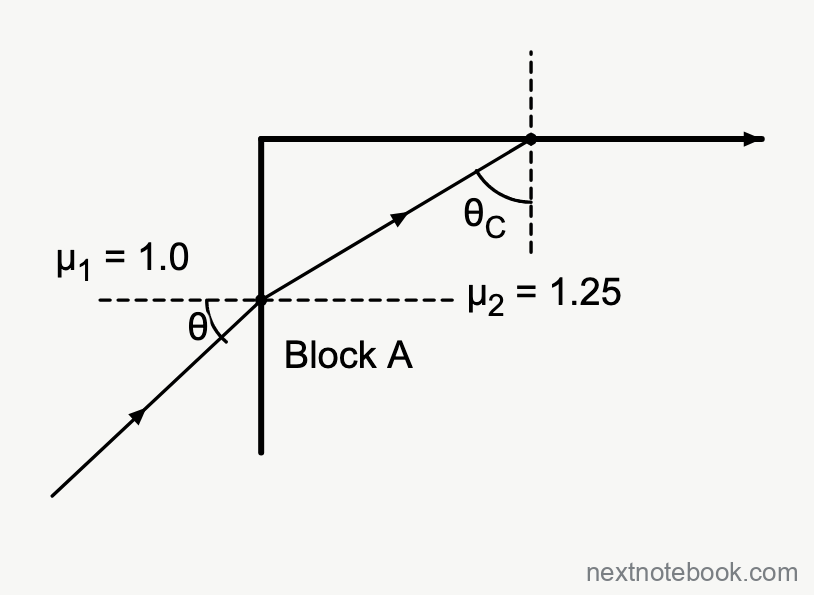
Correct answer: option 1, - Q58JEE Main 2025 · 7 Apr · Shift 2A transparent block A having refractive index is surrounded by another medium of refractive index as shown in figure. A light ray is incident on the flat face of the block with incident angle as shown in figure. What is the maximum value of for which light suffers total internal reflection at the top surface of the block?
 Tap an option to check.
Show answer
Correct answer: option 3, - Q59JEE Main 2025 · 23 Jan · Shift 1A spherical surface of radius of curvature R, separates air from glass (refractive index = 1.5). The centre of curvature is in the glass medium. A point object ‘O’ placed in air on the optic axis of the surface, so that its real image is formed at ‘I’ inside glass. The line OI intersects the spherical surface at P and PO = PI. The distance PO equals toTap an option to check.
Show answer
Correct answer: option 1,5 R - Q60JEE Main 2025 · 23 Jan · Shift 2A concave mirror of focal length f in air is dipped in a liquid of refractive index μ. Its focal length in the liquid will be:Tap an option to check.
Show answer
Correct answer: option 3,f
Showing 60 of 225 questions. The rest are free after login.
Practise Experimental skills in ray optics first. Solutions and video answers are free.