#18 OF 19 IN CHEMISTRY

Classification of Elements and Periodicity in Properties NEET PYQs (2012–2025) with answers
29 questions across 11 NEET years, about 1 a paper (≈4 marks). The topics asked most are Periodic Trends in Valence and Chemical Properties and Atomic and Ionic Size.
- 71% of papers
- ≈4 marks a paper
- Class 11 · Ch 3
From official NTA papers · Updated 9 Nov 2026
What's asked most
- Periodic Trends in Valence and Chemical Properties36%Periodic trends in physical properties, including melting and boiling points · Periodicity of valence and oxidation states
- Atomic and Ionic Size25%Atomic size and periodic trend in atomic radius · Atomic and ionic radii: definitions, comparison and periodic trends
- The Modern Periodic Table and Element Nomenclature14%Nomenclature of elements with atomic number greater than 100
- Electronic Configuration, Blocks and Position in the Periodic Table14%Representative elements, typical elements and inert gases · Electronic configuration represented in the periodic table
- Ionisation Enthalpy4%Ionisation energy: meaning, factors and periodic trends
See all 7 topics
- Electron Gain Enthalpy4%Electron affinity or electron gain enthalpy: factors and periodic trends
- Electronegativity and Its Scales4%Electronegativity: factors and periodic trends
How often it comes
See as a table
| Year | Questions |
|---|---|
| 2025 | 3 |
| 2024 | 2 |
| 2023 | 2 |
| 2022 | 1 |
| 2021 | 2 |
| 2020 | 2 |
| 2019 | 3 |
| 2018 | 4 |
| 2017 | 3 |
| 2016 | 1 |
| 2015 | 3 |
| 2014 | 2 |
| 2012 | 1 |
Where it fits
SYLLABUSNEET Chemistry syllabusWEIGHTAGE#18 of 19 Chemistry chaptersNCERTClass 11 Chemistry NCERT, Chapter 3
Questions here often join up with


All 29 questions
- Q1NEET 2025Which of the following statements are true? A. Unlike that has a very high melting point, has a very low melting point. B. On Pauling scale, the electronegativity values of and are not the same. C. , , , , and are all isoelectronic species. D. The correct order of the first ionization enthalpies of , , , and is . E. The atomic radius of is greater than that of and . Choose the correct answer from the options given below:Tap an option to check.
Show answer
Correct answer: option 2,C and E only - Q2NEET 2025Given below are two statements:
Statement I: Like nitrogen that can form ammonia, arsenic can form arsine.
Statement II: Antimony cannot form antimony pentoxide.
In the light of the above statements, choose the most appropriate answer from the options given below:Tap an option to check.Show answer
Correct answer: option 3,Statement I is correct but Statement II is incorrect - Q3NEET 2025Which among the following electronic configurations belong to main group elements? A. B. C. D. E. Choose the correct answer from the option given below:Tap an option to check.
Show answer
Correct answer: option 2,A and C only - Q4NEET 2024Arrange the following elements in increasing order of first ionization enthalpy: Choose the correct answer from the options given below:Tap an option to check.
Show answer
Correct answer: option 4, - Q5NEET 2024Arrange the following elements in increasing order of electronegativity: Choose the correct answer from the options given below:Tap an option to check.
Show answer
Correct answer: option 3, - Q6NEET 2023The element expected to form largest ion to achieve the nearest noble gas configuration isTap an option to check.
Show answer
Correct answer: option 3, - Q7NEET 2023Taking stability as the factor, which one of the following represents correct relationship?Tap an option to check.
Show answer
Correct answer: option 4, - Q8NEET 2022The IUPAC name of an element with atomic number 119 isTap an option to check.
Show answer
Correct answer: option 2,ununennium - Q9NEET 2021Noble gases are named because of their inertness towards reactivity. Identify an incorrect statement about them.Tap an option to check.
Show answer
Correct answer: option 3,Noble gases have very high melting and boiling points. - Q10NEET 2021In which one of the following arrangements the given sequence is not strictly according to the properties indicated against it?Tap an option to check.
Show answer
Correct answer: option 3,: Increasing values
Show the other 19 questions
- Q11NEET 2020Match the following: Which of the following is correct option?
Oxide Nature (a) (i) Basic (b) (ii) Neutral (c) (iii) Acidic (d) (iv) Amphoteric Tap an option to check.Show answer
Correct answer: option 4,(a) (ii) (b) (i) (c) (iv) (d) (iii) - Q12NEET 2020Identify the incorrect match.
Name IUPAC Official Name (a) Unnilunium (i) Mendelevium (b) Unniltrium (ii) Lawrencium (c) Unnilhexium (iii) Seaborgium (d) Unununnium (iv) Darmstadtium Tap an option to check.Show answer
Correct answer: option 2,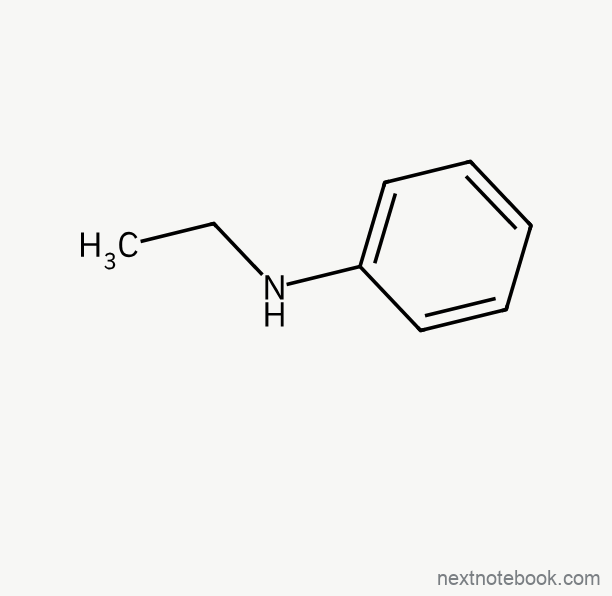
- Q13NEET 2019Which is the correct thermal stability order for ( and )?Tap an option to check.
Show answer
Correct answer: option 3, - Q14NEET 2019For the second period elements the correct increasing order of first ionisation enthalpy is:Tap an option to check.
Show answer
Correct answer: option 2, - Q15NEET 2019Which of the following is an amphoteric hydroxide?Tap an option to check.
Show answer
Correct answer: option 4, - Q16NEET 2018Which of the following oxides is most acidic in nature?Tap an option to check.
Show answer
Correct answer: option 1, - Q17NEET 2018Which one of the following elements is unable to form ion?Tap an option to check.
Show answer
Correct answer: option 2, - Q18NEET 2018The correct order of atomic radii in group 13 elements isTap an option to check.
Show answer
Correct answer: option 4, - Q19NEET 2018Which of the following statements is not true for halogens?Tap an option to check.
Show answer
Correct answer: option 2,All but fluorine show positive oxidation states - Q20NEET 2017 · Code YThe tendency to form monovalent compounds among the Group 13 elements is correctly exhibited in:Tap an option to check.
Show answer
Correct answer: option 2, - Stuck on one?Log in free
See the step-by-step solution and video for every question, free with login.
- Q21NEET 2017 · Code ASThe element has been discovered recently. It will belong to which of the following family group and electronic configuration?Tap an option to check.
Show answer
Correct answer: option 2,Carbon family, - Q22NEET 2017 · Code ASIt is because of inability of electrons of the valence shell to participate in bonding thatTap an option to check.
Show answer
Correct answer: option 1,is reducing while is oxidising - Q23NEET 2016 · Code ASIn context with beryllium, which one of the following statements is incorrect?Tap an option to check.
Show answer
Correct answer: option 1,Its salts rarely hydrolyze - Q24AIPMT 2015The formation of the oxide ion , from oxygen atom requires first an exothermic and then an endothermic step as shown below: ; ; Thus process of formation of in gas phase is unfavourable even though is isoelectronic with neon. It is due to the fact thatTap an option to check.
Show answer
Correct answer: option 1,Electron repulsion outweighs the stability gained by achieving noble gas configuration - Q25AIPMT 2015On heating which of the following releases most easily?Tap an option to check.
Show answer
Correct answer: option 3, - Q26AIPMT 2015The stability of oxidation state among , , and increases in the sequence:Tap an option to check.
Show answer
Correct answer: option 2,* - Q27AIPMT 2014Which of the following orders of ionic radii is correctly represented?
- Q28AIPMT 2014Acidity of diprotic acids in aqueous solutions increases in the orderTap an option to check.
Show answer
Correct answer: option 1, - Q29AIPMT 2012Identify the wrong statement in the following:Tap an option to check.
Show answer
Correct answer: option 1,Amongst isoelectronic species, smaller the positive charge on the cation, smaller is the ionic radius.
Practise Periodic Trends in Valence and Chemical Properties first. Solutions and video answers are free.