#8 OF 19 IN CHEMISTRY

Chemical Kinetics NEET PYQs (2012–2025) with answers
27 questions across 12 NEET years, about 2 a paper (≈7 marks).
- 85% of papers
- ≈7 marks a paper
- Class 12 · Ch 3
From official NTA papers · Updated 9 Nov 2026
How often it comes
See as a table
| Year | Questions |
|---|---|
| 2025 | 2 |
| 2024 | 3 |
| 2023 | 2 |
| 2022 | 2 |
| 2021 | 2 |
| 2020 | 2 |
| 2019 | 2 |
| 2018 | 2 |
| 2017 | 4 |
| 2016 | 1 |
| 2015 | 1 |
| 2013 | 2 |
| 2012 | 2 |
Where it fits
SYLLABUSNEET Chemistry syllabusWEIGHTAGE#8 of 19 Chemistry chaptersNCERTClass 12 Chemistry NCERT, Chapter 3
Questions here often join up with


All 27 questions
- Q1NEET 2025If the half-life for a first order reaction is 1 minute, then the time required for 99.9% completion of the reaction is closest to:Tap an option to check.
Show answer
Correct answer: option 4,10 minutes - Q2NEET 2025If the rate constant of a reaction is , how much time does it take for concentration of the reactant to get reduced to ? (Given: )Tap an option to check.
Show answer
Correct answer: option 1, - Q3NEET 2024Activation energy of any chemical reaction can be calculated if one knows the value ofTap an option to check.
Show answer
Correct answer: option 2,rate constant at two different temperatures - Q4NEET 2024Which plot of vs is consistent with Arrhenius equation?Tap an option to check.
Show answer
Correct answer: option 2,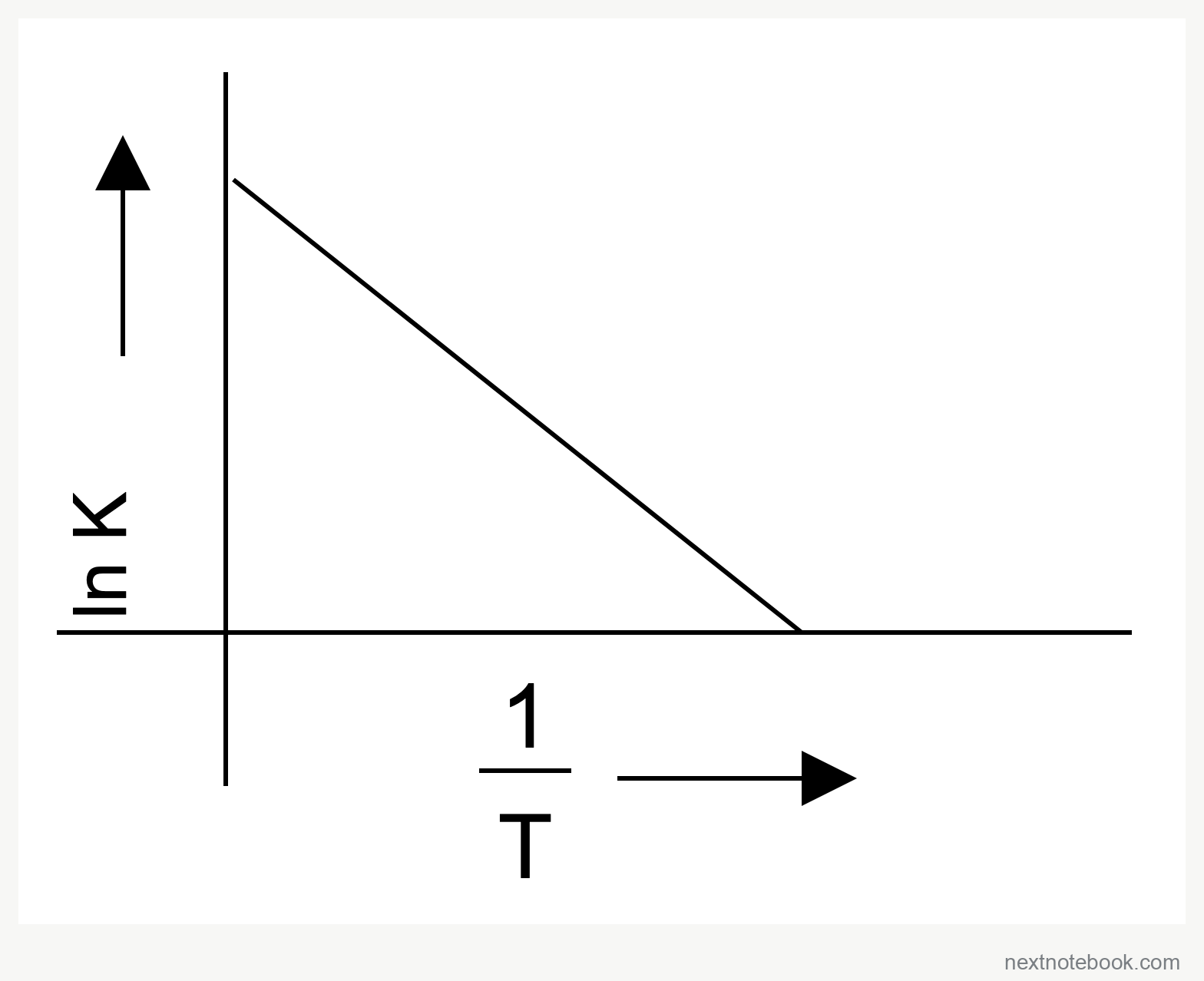
- Q5NEET 2024The rate of a reaction quadruples when temperature changes from to . Calculate the energy of activation. Given ,Tap an option to check.
Show answer
Correct answer: option 3, - Q6NEET 2023Given below are two statements: one is labelled as Assertion A and the other is labelled as
Reason R:
Assertion A: A reaction can have zero activation energy. Reasons R: The minimum extra amount of energy absorbed by reactant molecules so that their energy becomes equal to threshold value, is called activation energy.
In the light of the above statements, choose the correct answer from the options given below:Tap an option to check.Show answer
Correct answer: option 2,Both A and R are true and R is NOT the correct explanation of A - Q7NEET 2023For a certain reaction, the rate = , when the initial concentration of A is tripled keeping concentration of B constant, the initial rate wouldTap an option to check.
Show answer
Correct answer: option 3,Increase by a factor of nine - Q8NEET 2022The given graph is a representation of kinetics of a reaction. [figure] The and axes for zero and first order reactions, respectively are
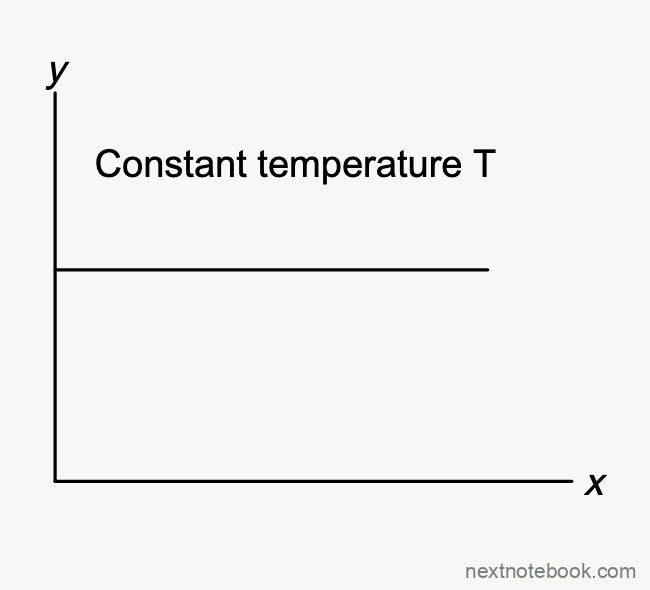 Tap an option to check.
Show answer
Correct answer: option 4,zero order ( rate and concentration), first order ( and concentration) - Q9NEET 2022For a first order reaction Products, initial concentration of is , which becomes after minutes. Rate constant for the reaction in isTap an option to check.
Show answer
Correct answer: option 3, - Q10NEET 2021For a reaction , enthalpy of reaction is and enthalpy of activation is . The correct potential energy profile for the reaction is shown in option.Tap an option to check.
Show answer
Correct answer: option 3,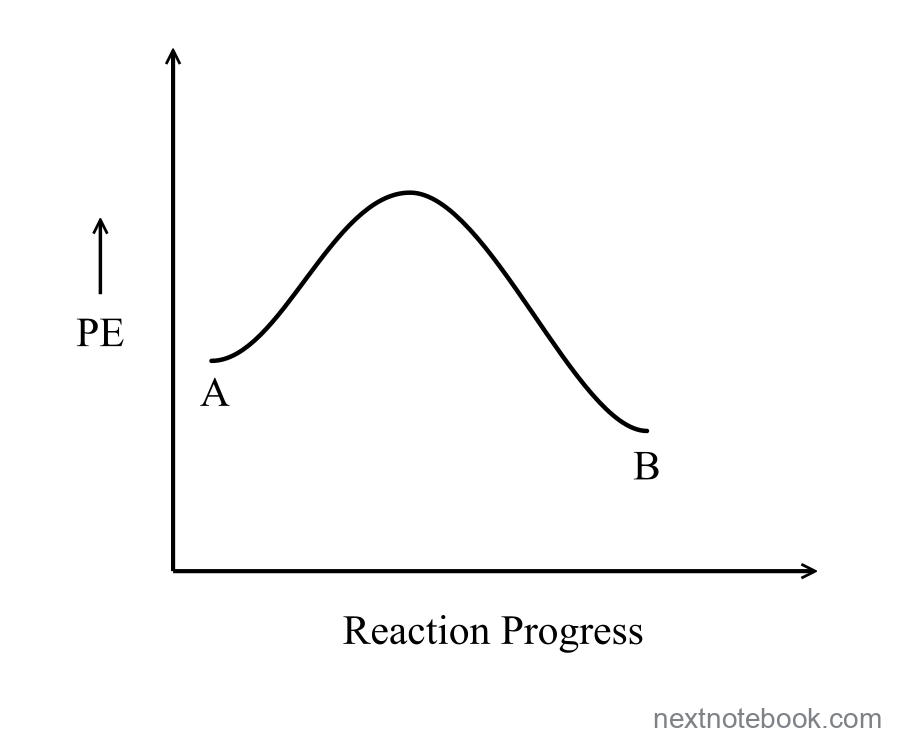
Show the other 17 questions
- Q11NEET 2021The slope of Arrhenius Plot ( vs ) of first order reaction is . The value of of the reaction is. Choose the correct option for your answer. [Given ]Tap an option to check.
Show answer
Correct answer: option 2, - Q12NEET 2020The rate constant for a first order reaction is . The time required to reduce of the reactant to is:Tap an option to check.
Show answer
Correct answer: option 1, - Q13NEET 2020An increase in the concentration of the reactants of a reaction leads to change inTap an option to check.
Show answer
Correct answer: option 2,collision frequency - Q14NEET 2019If the rate constant for a first order reaction is , the time required for the completion of of the reaction is given by:Tap an option to check.
Show answer
Correct answer: option 3, - Q15NEET 2019For the chemical reaction The correct option is:Tap an option to check.
Show answer
Correct answer: option 3, - Q16NEET 2018When initial concentration of the reactant is doubled, the half-life period of a zero order reactionTap an option to check.
Show answer
Correct answer: option 1,Is doubled - Q17NEET 2018The correct difference between first and second order reactions is thatTap an option to check.
Show answer
Correct answer: option 1,The half-life of a first-order reaction does not depend on ; the half-life of a second-order reaction does depend on - Q18NEET 2017 · Code YConsider the reaction between chlorine and nitric oxide On doubling the concentration of both reactants, the rate of the reaction increases by a factor of 8. However, if only the concentration of is doubled, the rate increases by a factor of 2. The order of this reaction with respect to NO is:Tap an option to check.
Show answer
Correct answer: option 4,2 - Q19NEET 2017 · Code YFor the reaction, , if , then the correct statement among the following isTap an option to check.
Show answer
Correct answer: option 3,The value of - Q20NEET 2017 · Code ASMechanism of a hypothetical reaction is given below: (i) (fast) (ii) (slow) (iii) (fast) The overall order of the reaction will beTap an option to check.
Show answer
Correct answer: option 4, - Stuck on one?Log in free
See the step-by-step solution and video for every question, free with login.
- Q21NEET 2017 · Code ASA first order reaction has a specific reaction rate of . How much time will it take for of the reactant to reduce to ?Tap an option to check.
Show answer
Correct answer: option 2,second - Q22NEET 2016Which of the following describes the given graph correctly?
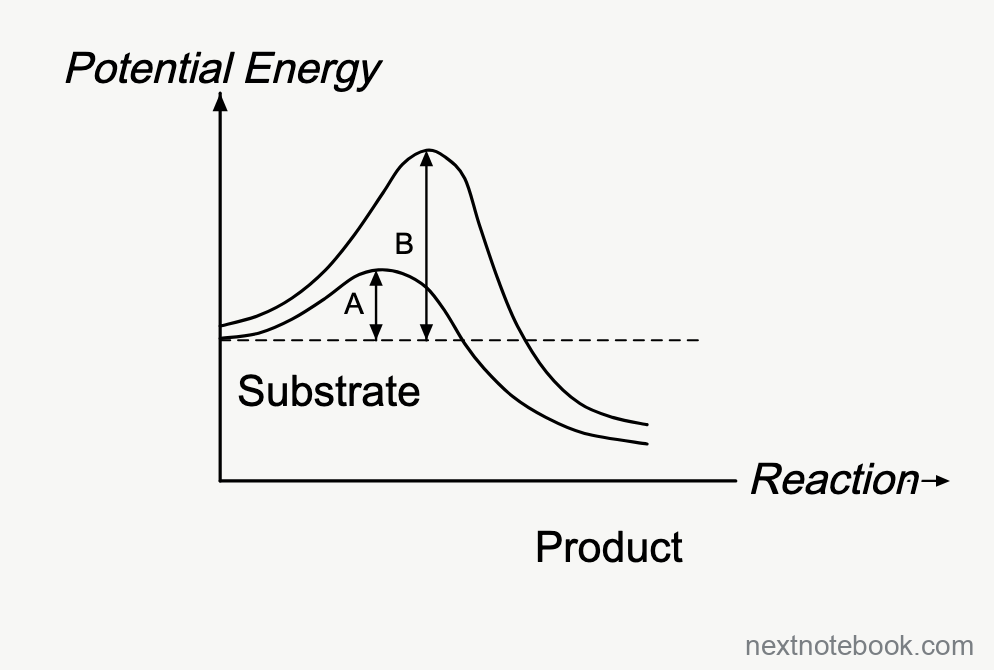 Tap an option to check.
Show answer
Correct answer: option 4,Exothermic reaction with energy A in presence of enzyme and B in absence of enzyme - Q23AIPMT 2015The rate constant of the reaction is mole per second. If the concentration of is then concentration of after minutes is:Tap an option to check.
Show answer
Correct answer: option 4, - Q24NEET 2013 · Code ASWhat is the activation energy for a reaction if its rate doubles when the temperature is raised from to ? ()Tap an option to check.
Show answer
Correct answer: option 3, - Q25NEET 2013 · Code ASA reaction having equal energies of activation for forward and reverse reactions hasTap an option to check.
Show answer
Correct answer: option 3, - Q26AIPMT 2012In a reaction, Product, rate is doubled when the concentration of is doubled, and rate increases by a factor of when the concentrations of both the reactants ( and ) are doubled, rate law for the reaction can be written as:Tap an option to check.
Show answer
Correct answer: option 4, - Q27AIPMT 2012In a zero- order reaction for every rise of temperature, the rate is doubled. If the temperature is increased from to , the rate of the reaction will become:Tap an option to check.
Show answer
Correct answer: option 2,512 times
Stuck on one?
Log in freeSee the step-by-step solution and video for every question, free with login.