#16 OF 19 IN CHEMISTRY
Alcohols, Phenols and Ethers JEE Main PYQs (2016–2026) with answers
155 questions across 10 JEE Main years, about 1 a paper (≈4 marks). The topics asked most are Preparation of alcohols and Preparation and reactions of ethers.
- 64% of papers
- ≈4 marks a paper
- Class 12 · Ch 7
From official NTA papers · Updated 9 Nov 2026
What's asked most
- Preparation of alcohols11%Preparation of alcohols from alkenes by hydration · Preparation of alcohols by substitution and hydrolysis of halogenoalkanes
- Preparation and reactions of ethers5%Preparation of ethers, including Williamson synthesis
- Phenols: preparation, acidity and reactions4%Preparation of phenols · Classification and derivatives of phenols
- Physical properties of alcohols, phenols and ethers2%Hydrogen bonding, boiling points and solubility of alcohols
- Introduction, classification and structure of alcohols, phenols and ethers1%Classification of alcohols and ethers · Introduction to hydroxy compounds and ethers
See all 7 topics
- Nomenclature and isomerism1%IUPAC and common nomenclature of alcohols, phenols and ethers · Structural and functional isomerism among alcohols and ethers
- Commercially important alcohols and uses<1%Methanol: preparation, properties and uses · Ethanol: preparation, properties and uses
How often it comes
See as a table
| Year | Questions |
|---|---|
| 2026 | 12 |
| 2025 | 9 |
| 2024 | 31 |
| 2023 | 19 |
| 2022 | 27 |
| 2021 | 24 |
| 2020 | 17 |
| 2019 | 12 |
| 2018 | 2 |
| 2017 | 1 |
| 2016 | 1 |
Where it fits
SYLLABUSJEE Main Chemistry syllabusWEIGHTAGE#16 of 19 Chemistry chaptersNCERTClass 12 Chemistry NCERT, Chapter 7
Questions here often join up with
All 155 questions
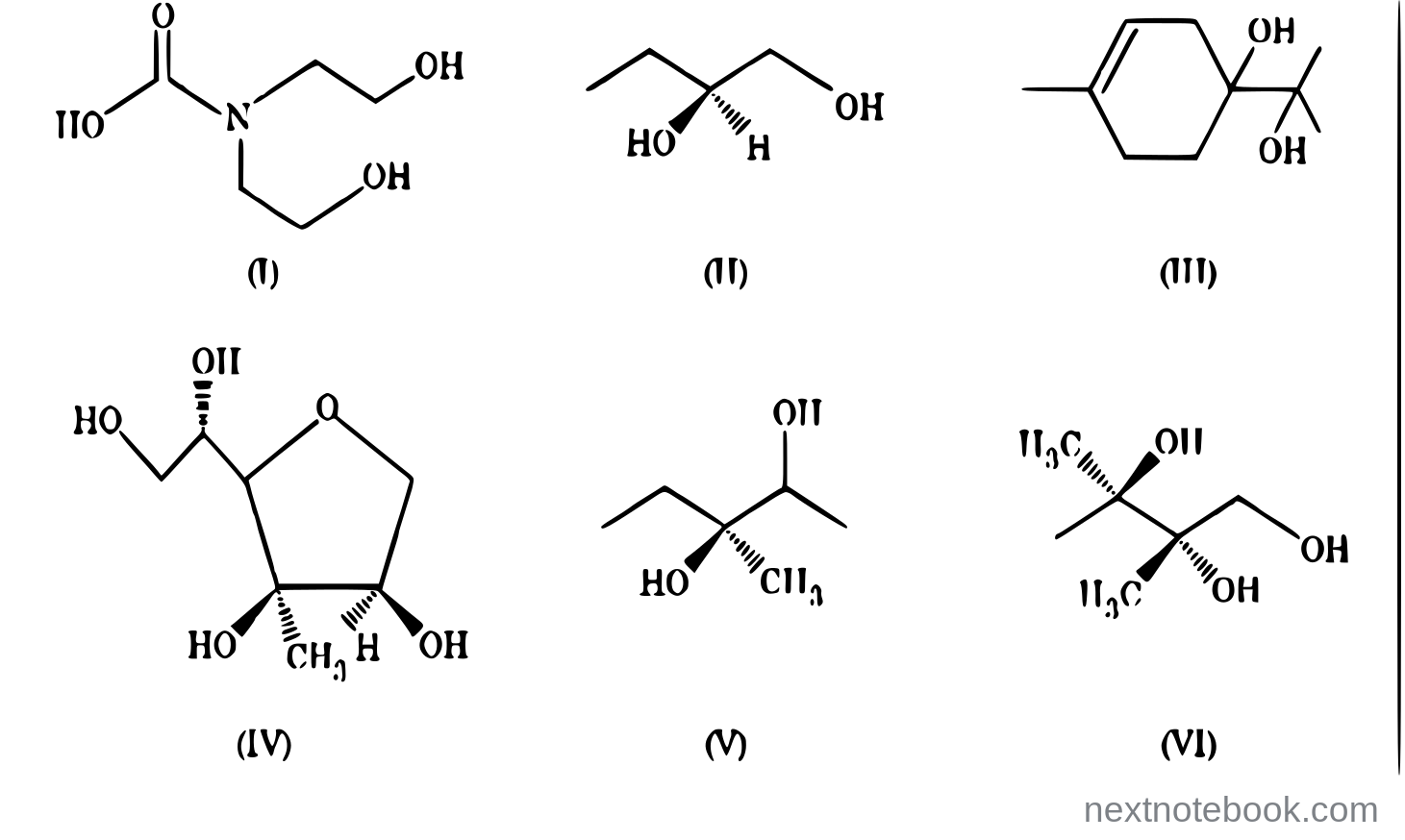
- Q1JEE Main 2026 · 24 Jan · Shift 2From the following, how many compounds contain at least one secondary alcohol? Choose the correct unwer from the options given below:
 Tap an option to check.
Show answer
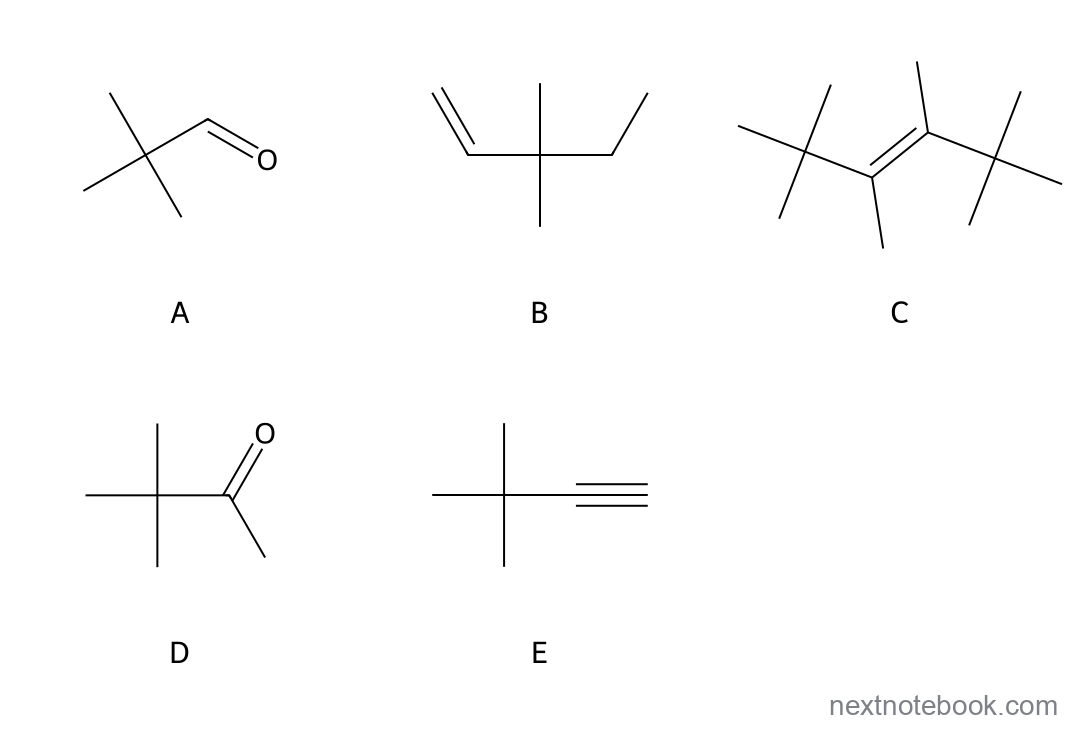
Correct answer: option 2,Four - Q2JEE Main 2026 · 22 Jan · Shift 23,3-Dimethyl-2-butanol cannot be prepared by (the starting compounds are drawn in the figure): A. 2,2-dimethylpropanal (pivaldehyde) with in dry ether, then . B. 3,3-dimethylpent-1-ene with . C. 2,2,3,4,5,5-hexamethylhex-3-ene, , with (i) , (ii) . D. 3,3-dimethylbutan-2-one with . E. 3,3-dimethylbut-1-yne with . Choose the correct answer from the options given below:
 Tap an option to check.
Show answer
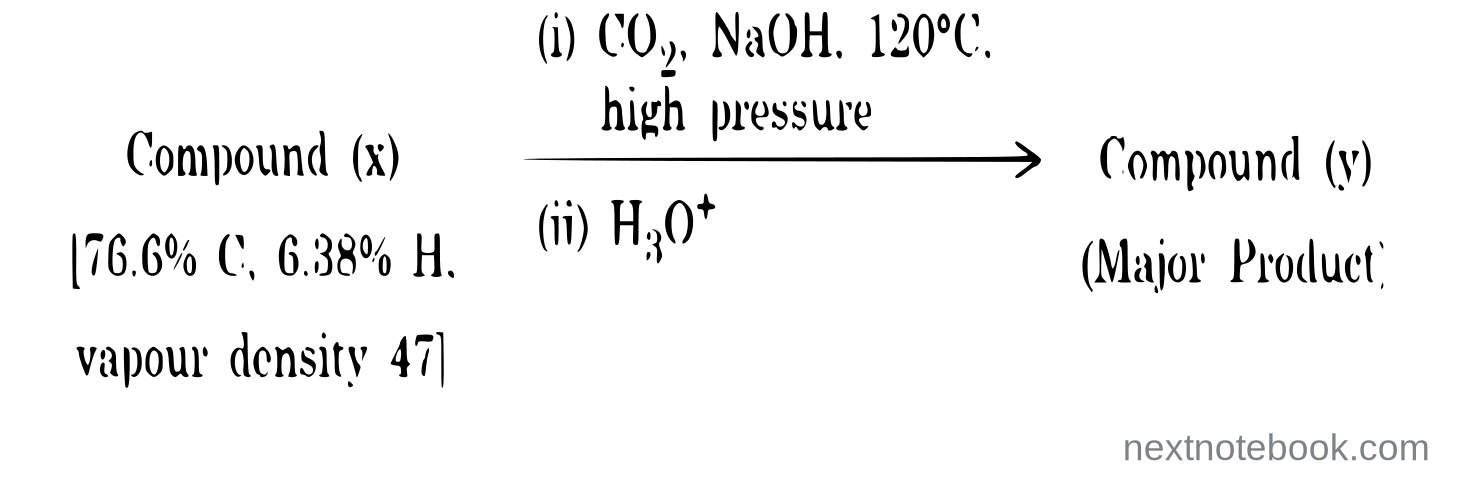
Correct answer: option 3,B and E only - Q3JEE Main 2026 · 28 Jan · Shift 1Consider the following reaction sequence Compound () [ C, H, vapour density ] —(i) , , , high pressure (ii) Compound () (Major Product) Compound () develops characteristic colour with neutral solution. Identify the INCORRECT statement from the following for the above sequence.
 Tap an option to check.
Show answer
Correct answer: option 3,Compound is more acidic than compound . - Q4JEE Main 2026 · 4 Apr · Shift 1Amongst the following, the total number of compounds soluble in aqueous at room temperature is: (I) benzaldehyde, (II) 1-naphthol, (III) 4-(dimethylamino)phenol, (IV) 4-methylphenol (p-cresol), (V) benzoic acid, (VI) N,N-dimethylcyclohexanamine, (VII) 1-naphthoic acid, (VIII) 1,4-di-tert-butylbenzene, (IX) 1-naphthylmethanol (all shown in the figure).
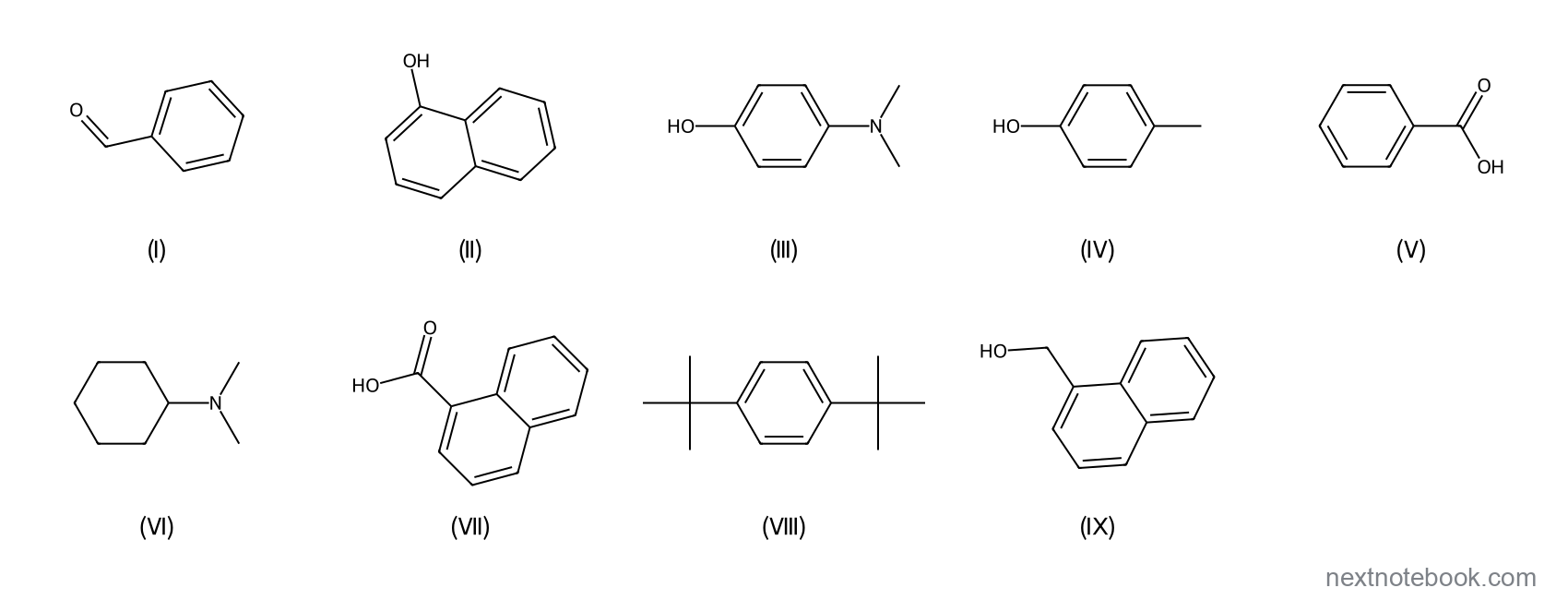 Tap an option to check.
Show answer
Correct answer: option 1,5 - Q5JEE Main 2026 · 6 Apr · Shift 2Consider the following reaction. Product
Statement I: In the above reaction, product formed will be a mixture of benzyl alcohol and iodobenzene.
Statement II: In the above reaction, the bond is cleaved to give the product.
In the light of the above statements, choose the correct answer from the options given below:Tap an option to check.Show answer
Correct answer: option 4,Statement I is false but Statement II is true - Q6JEE Main 2026 · 6 Apr · Shift 1Consider the following sequence of reactions P The major product P is:
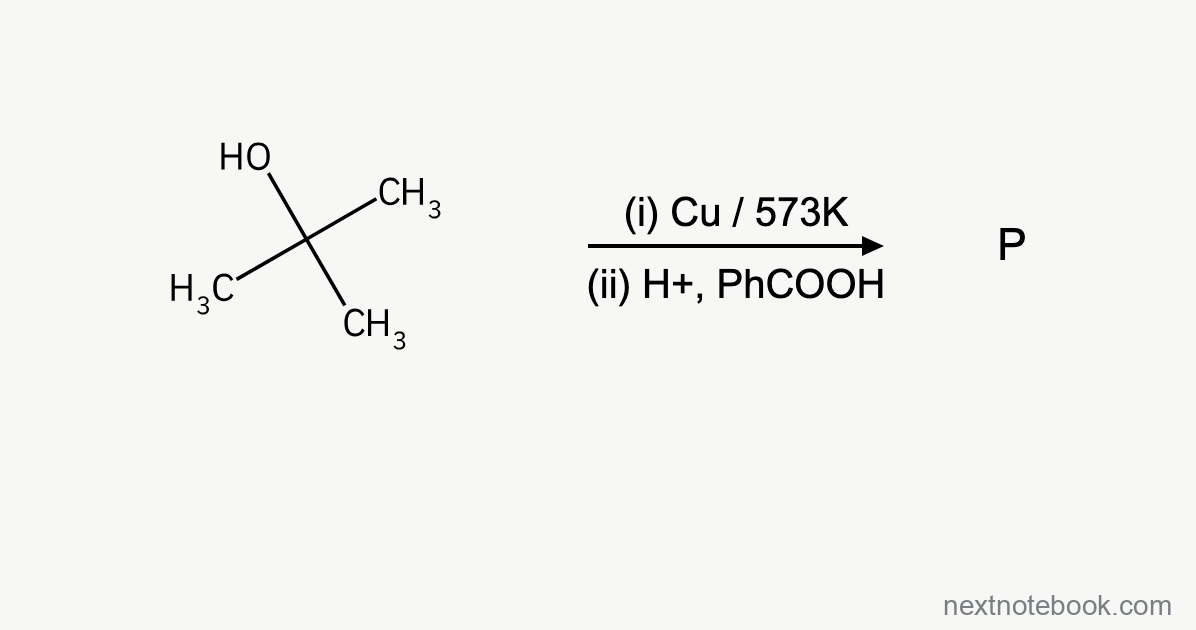 Tap an option to check.
Show answer
Correct answer: option 3,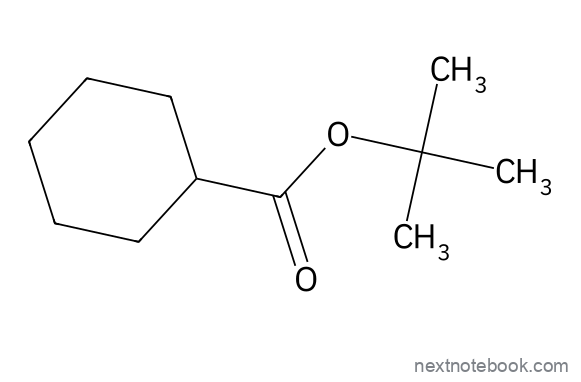
- Q7JEE Main 2026 · 5 Apr · Shift 1Consider compounds A, B and C with following structural formulae For the conversion of B from A, reagent (D) required is ________ and structural formula of product (E) obtained when C undergoes same reaction using excess reagent (D) is ________.Tap an option to check.
Show answer
Correct answer: option 4,D: Conc. or ; E: - Q8JEE Main 2026 · 22 Jan · Shift 1Given below are two statements:
Statement I: Phenol on treatment with aq. under refluxing condition, followed by acidification produces -hydroxy benzaldehyde as the major product and -hydroxy benzaldehyde as the minor product.
Statement II: The mixture of -hydroxybenzaldehyde and -hydroxybenzaldehyde can be easily separated through steam distillation.
In the light of the above statements, choose the correct answer from the options given belowTap an option to check.Show answer
Correct answer: option 1,Statement I is false but Statement II is true - Q9JEE Main 2026 · 24 Jan · Shift 1A hydroxy compound with molar mass is acetylated with acetic anhydride, using a large excess of the reagent ensuring complete acetylation of all hydroxyl groups. The product obtained has a molar mass of . The number of hydroxyl groups present in compound is:Tap an option to check.
Show answer
Correct answer: option 2, - Q10JEE Main 2026 · 8 Apr · Shift 2Which of the following amino acid will give violet coloured complex with neutral ferric chloride solution?Tap an option to check.
Show answer
Correct answer: option 3,Tyrosine
Show the other 50 questions
- Q11JEE Main 2026 · 4 Apr · Shift 2Match the LIST-I with LIST-II. List-I (Compound): A. cyclohexanol (cyclohexane ring with ); B. cyclohexylamine (cyclohexane ring with ); C. cyclohexanecarbaldehyde (cyclohexane ring with ); D. phenol (benzene ring with ). List-II (Test): I. Hinsberg's reagent test; II. Phthalein dye test; III. Lucas test; IV. Tollen's test. Choose the correct answer from the options given below:
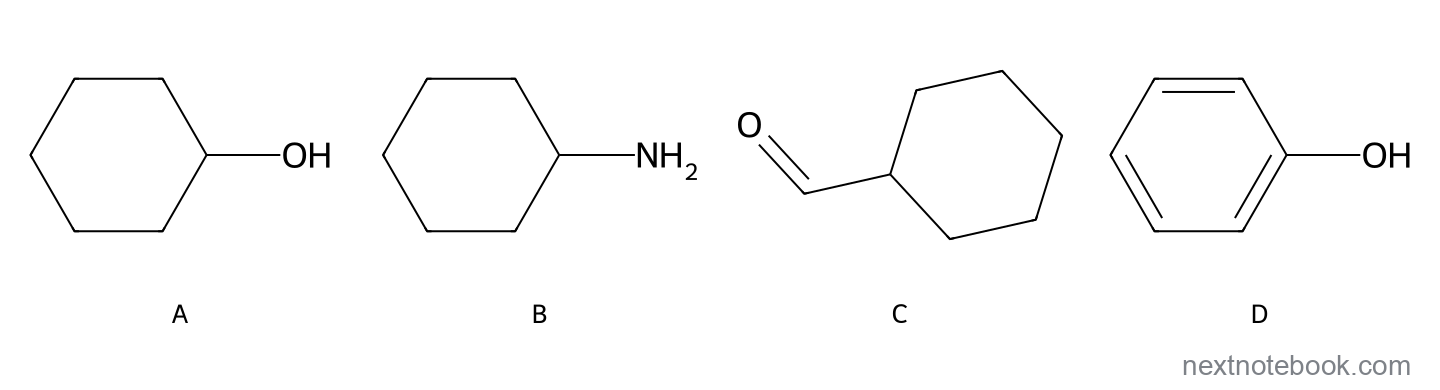 Tap an option to check.
Show answer
Correct answer: option 1,A-III, B-I, C-IV, D-II - Q12JEE Main 2026 · 5 Apr · Shift 1One mole of phenol is treated with dilute at to give a mixture of products. The mixture is separated by steam distillation. The steam volatile compound is separated. The increase in percentage of oxygen in with respect to phenol is ________ . (Given molar mass in )Tap Show answer to check.
Show answer
Answer: 175 - Q13JEE Main 2025 · 8 Apr · Shift 2Match the LIST-I with LIST-II LIST-I (Reagent) A. Sodium bicarbonate solution B. Neutral ferric chloride C. ceric ammonium nitrate D. alkaline LIST-II (Functional Group detected) I. double bond/ unsaturation. II. carboxylic acid III. phenolic IV. alcoholic Choose the correct answer from the options given below:Tap an option to check.
Show answer
Correct answer: option 1,A-II, B-III, C-IV, D-I - Q14JEE Main 2025 · 4 Apr · Shift 1Benzene is treated with oleum to produce compound (X) which when further heated with molten sodium hydroxide followed by acidification produces compound (Y). The compound Y is treated with zinc metal to produce compound (Z). Identify the structure of compound (Z) from the following option.Tap an option to check.
Show answer
Correct answer: option 4,Benzene - Q15JEE Main 2025 · 7 Apr · Shift 1Given below are two statements:
Statement I: Dimethyl ether is completely soluble in water. However, diethyl ether is soluble in water to a very small extent.
Statement II: Sodium metal can be used to dry diethyl ether and not ethyl alcohol.
In the light of given statements, choose the correct answer from the options given belowTap an option to check.Show answer
Correct answer: option 4,Statement I is false but Statement II are true - Q16JEE Main 2025 · 23 Jan · Shift 1What amount of bromine will be required to convert of phenol into 2,4,6-tribromophenol? (Given molar mass in of C, H, O, Br: 12, 1, 16, 80 respectively)Tap an option to check.
Show answer
Correct answer: option 3, - Q17JEE Main 2025 · 8 Apr · Shift 2Which one of the following reactions will not lead to the desired ether formation in major proportion?Tap an option to check.
Show answer
Correct answer: option 2, - Q18JEE Main 2025 · 4 Apr · Shift 2A toxic compound “” when reacted with in aqueous acidic medium yields an edible cooking component and food preservative “”. “” is converted to “” by diborane and can be used as an additive to petrol to reduce emission. “” upon reaction with oleum at yields an inhalable anesthetic “”. Identify “”, “”, “” & “”, respectively:Tap an option to check.
Show answer
Correct answer: option 4,Methanol; acetic acid; ethanol; diethyl ether - Q19JEE Main 2025 · 7 Apr · Shift 1Which of the following compounds is least likely to give effervescence of in presence of aq. ?Tap an option to check.
Show answer
Correct answer: option 3,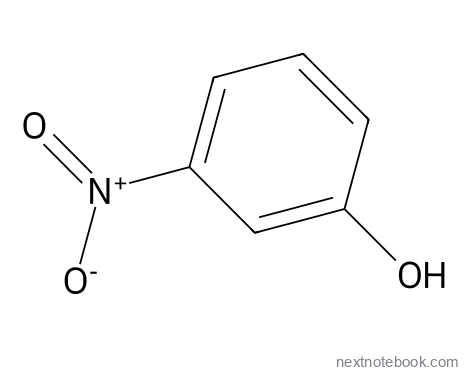
- Q20JEE Main 2025 · 23 Jan · Shift 2Identify the products [A] and [B], respectively in the following reaction:
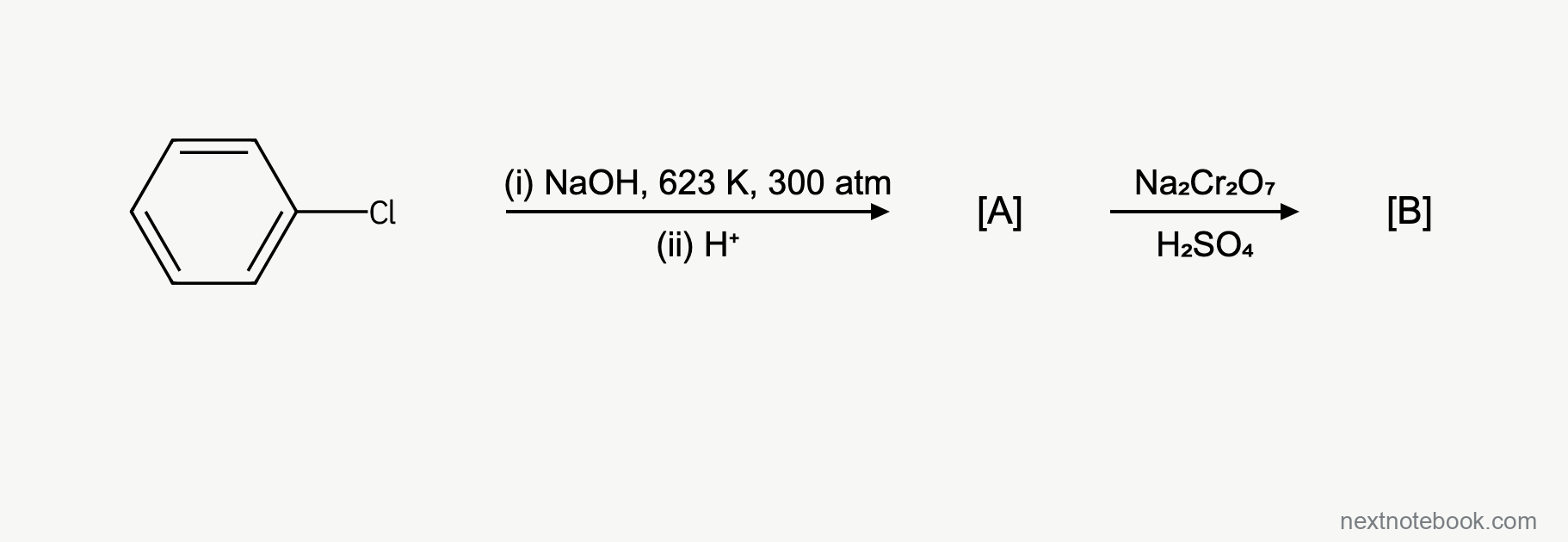 Tap an option to check.
Show answer
Correct answer: option 4,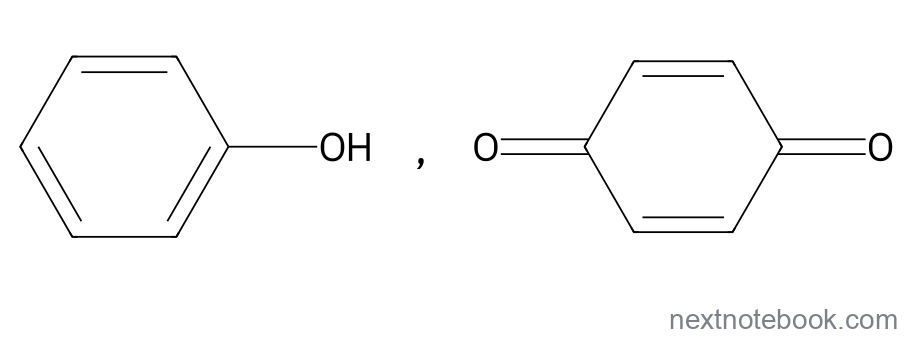
- Stuck on one?Log in free
See the step-by-step solution and video for every question, free with login.
- Q21JEE Main 2025 · 23 Jan · Shift 2Given below are two statements: Statement (I): The boiling points of alcohols and phenols increase with increase in the number of C-atoms. Statement (II): The boiling points of alcohols and phenols are higher in comparison to other class of compounds such as ethers, haloalkanes. In the light of the above statements, choose the correct answer from the options given below:Tap an option to check.
Show answer
Correct answer: option 1,Both Statement I and Statement II are true - Q22JEE Main 2024 · 30 Jan · Shift 2Salicylaldehyde is synthesized from phenol, when reacted withTap an option to check.
Show answer
Correct answer: option 4,, NaOH - Q23JEE Main 2024 · 27 Jan · Shift 2Phenolic group can be identified by a positive:Tap an option to check.
Show answer
Correct answer: option 1,Phthalein dye test - Q24JEE Main 2024 · 9 Apr · Shift 2Major product of the following reaction is
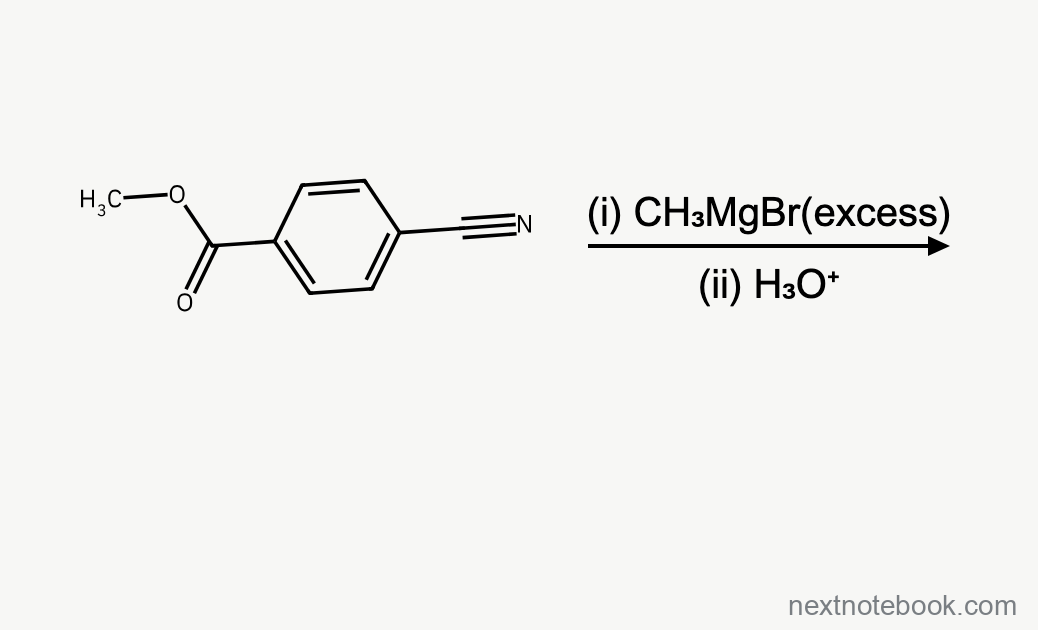 Tap an option to check.
Show answer
Correct answer: option 1,Benzene ring bearing and groups at para positions - Q25JEE Main 2024 · 8 Apr · Shift 11-Methylcyclohexan-1-ol (a cyclohexane ring in which one carbon carries both and ) is heated with conc. to give , and is treated with in pyridine to give . Identify the major products and respectively in the following set of reactions.Tap an option to check.
Show answer
Correct answer: option 4,= 1-methylcyclohexene; = 1-methylcyclohexyl acetate ( on the ring carbon that carries ) - Q26JEE Main 2024 · 8 Apr · Shift 2Which one the following compounds will readily react with dilute ?Tap an option to check.
Show answer
Correct answer: option 2, - Q27JEE Main 2024 · 27 Jan · Shift 2Major product formed in the reaction of tert-butyl cyclohexyl ether, cyclohexyl , with is a mixture of:Tap an option to check.
Show answer
Correct answer: option 2,cyclohexanol and - Q28JEE Main 2024 · 6 Apr · Shift 1In Reimer-Tiemann reaction phenol is converted into salicylaldehyde through an intermediate. The structure of intermediate is ____________.Tap an option to check.
Show answer
Correct answer: option 4,Phenoxide sodium salt with an ortho- group - Q29JEE Main 2024 · 29 Jan · Shift 2According to IUPAC system, the compound [cyclohexene ring structure with OH substituent] is named as
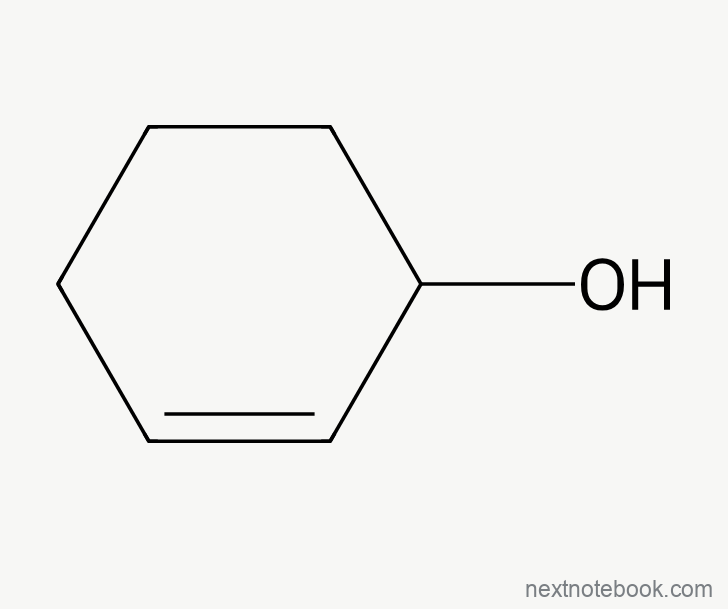 Tap an option to check.
Show answer
Correct answer: option 2,Cyclohex-2-en-1-ol - Q30JEE Main 2024 · 5 Apr · Shift 1For the compounds: (A) (B) (C) (D) The increasing order of boiling point is: Choose the correct answer from the options given below:Tap an option to check.
Show answer
Correct answer: option 2,(B) (A) (C) (D) - Stuck on one?Log in free
See the step-by-step solution and video for every question, free with login.
- Q31JEE Main 2024 · 9 Apr · Shift 1For the given compounds, the correct order of increasing value:
(a) phenol,
(b) 4-nitrophenol,
(c) 3-methoxyphenol,
(d) 3-nitrophenol,
(e) 4-methoxyphenol (drawn in the figure).
Choose the correct answer from the options given below: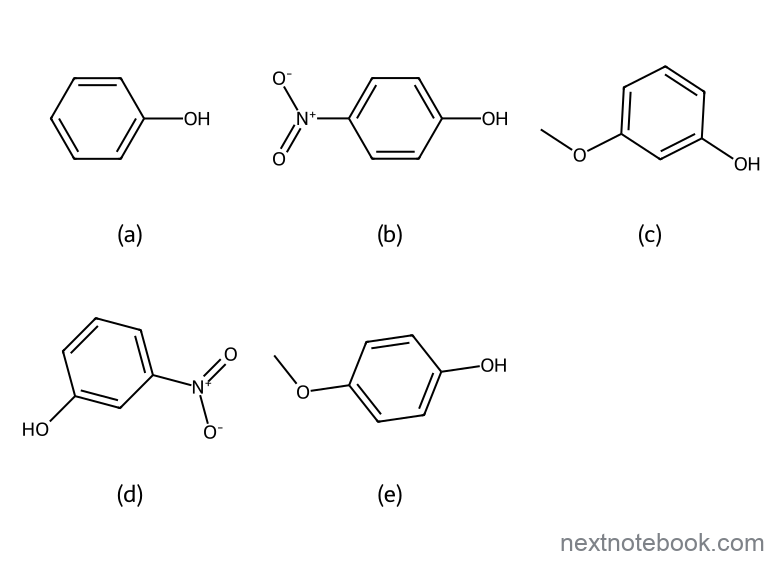
- Q32JEE Main 2024 · 6 Apr · Shift 1Given below are two statements:
Statement I: Picric acid is - trinitrotoluene.
Statement II: Phenol-- disulphonic acid is treated with Conc. to get picric acid.
In the light of the above statements, choose the most appropriate answer from the options given below:Tap an option to check.Show answer
Correct answer: option 3,Statement I is incorrect but Statement II is correct. - Q33JEE Main 2024 · 30 Jan · Shift 2Products and formed in the following set of reactions are: 1-methylcyclohexene (the figure; on one carbon of the ) is treated (i) with to give , and (ii) with , then , to give .
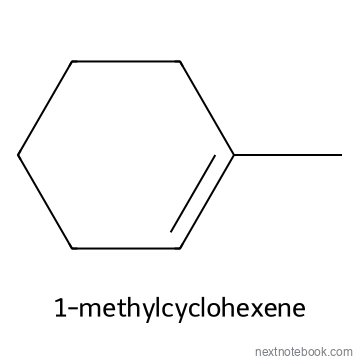 Tap an option to check.
Show answer
Correct answer: option 2,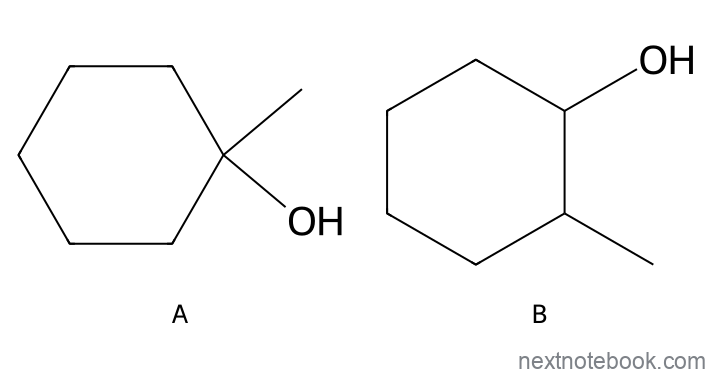
- Q34JEE Main 2024 · 1 Feb · Shift 2Match List-I with List-II. Choose the correct answer from the options given below:
List-I (Reactants) List-II (Product) (A) Phenol, (I) Salicylaldehyde (B) Phenol, , , (II) Salicylic acid (C) Phenol, , , (III) Benzene (D) Phenol, conc. (IV) Picric acid Tap an option to check.Show answer
Correct answer: option 2,(A) – (III), (B) – (I), (C) – (II), (D) – (IV) - Q35JEE Main 2024 · 8 Apr · Shift 2Q . Match List – I with List – II List – I (Test)
(a) Bayer’s test
(b) Ceric ammonium nitrate test
(c) Phthalein dye test
(d) Schiff’s test List – II (Identification) (I) Phenol (II) Aldehyde (III) Alcoholic-OH group (IV) Unsaturation
Choose the correct answer from the options given below:Tap an option to check.Show answer
Correct answer: option 3,(a) – (IV), (b) – (III), (c) – (I), (d) – (II) - Q36JEE Main 2024 · 29 Jan · Shift 1Given below are two statements: One is labelled as Assertion A and the other is labelled as Reason R.
Assertion A: Aryl halides cannot be prepared by replacement of hydroxyl group of phenol by halogen atom.
Reason R: Phenols react with halogen acids violently.
In the light of the above statements, choose the most appropriate from the options given below:Tap an option to check.Show answer
Correct answer: option 3,A is true but R is false - Q37JEE Main 2024 · 27 Jan · Shift 1*70. Given below are two statements: Statement (I): p-nitrophenol is more acidic than m-nitrophenol and o-nitrophenol. Statement (II): Ethanol will give immediate turbidity with Lucas reagent. In the light of the above statements, choose the correct answer from the options given below:Tap an option to check.
Show answer
Correct answer: option 1,Statement I is true but Statement II is false - Q38JEE Main 2024 · 31 Jan · Shift 1Given below are two statements: One is labelled as Assertion A and the other is labelled as
Reason R:
Assertion A: Alcohols react both nucleophiles and electrophiles
Reason R: Alcohols react with active metals such as sodium, potassium and aluminium to yield corresponding alkoxides and liberate hydrogen
In the light of the above statements, choose the correct answer from the options given below:Tap an option to check.Show answer
Correct answer: option 1,Both A and R are true but R is NOT the correct explanation of A - Q39JEE Main 2024 · 5 Apr · Shift 2Which one of the following reactions is NOT possible?Tap an option to check.
Show answer
Correct answer: option 1,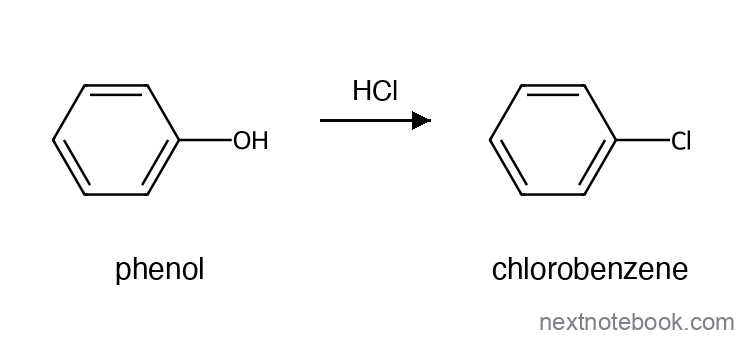
- Q40JEE Main 2024 · 27 Jan · Shift 2Match List I with List II Choose the correct answer from the options given below:
List-I (Reaction) List-II (Reagent(s)) (A) phenol → o-hydroxybenzoic acid (I) Na2Cr2O7, H2SO4 (B) phenol → o-hydroxybenzaldehyde (II) (i)NaOH (ii) CH3Cl (C) phenol → p-benzoquinone (III) (i)NaOH, CHCl3 (ii) NaOH (iii) HCl (D) phenol → anisole (IV) (i)NaOH (ii) CO2 (iii)HCl Tap an option to check.Show answer
Correct answer: option 3,(A) – (IV), (B) – (III), (C) – (I), (D) – (II) - Stuck on one?Log in free
See the step-by-step solution and video for every question, free with login.
- Q41JEE Main 2024 · 4 Apr · Shift 2Product 'A' Product A Product "B" Product A Product "C" Consider the above reactions, identify product B and product C.
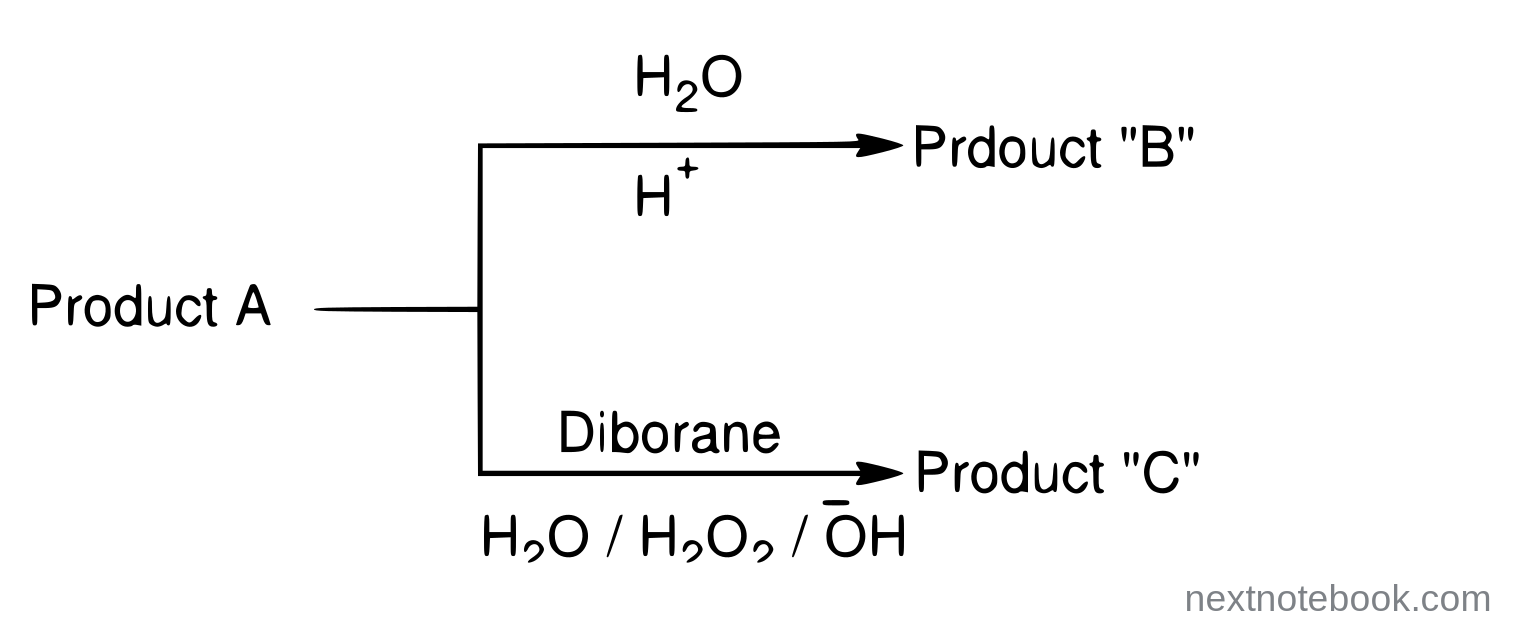 Tap an option to check.
Show answer
Correct answer: option 3,B = -Propanol C = -Propanol - Q42JEE Main 2024 · 5 Apr · Shift 1Given below are two statements:
Statement I: Bromination of phenol in solvent with low polarity such as or requires Lewis acid catalyst.
Statement II: The Lewis acid catalyst polarizes the bromine to generate .
In the light of the above statements, choose the correct answer from the options given below:Tap an option to check.Show answer
Correct answer: option 3,Statement I is false but Statement II is true - Q43JEE Main 2024 · 29 Jan · Shift 2Phenol treated with chloroform in presence of sodium hydroxide, which is further hydrolyzed in presence of an acid resultsTap an option to check.
Show answer
Correct answer: option 3,-Hydroxybenzaldehyde - Q44JEE Main 2024 · 29 Jan · Shift 1The major product in the following reaction is: 3-ethoxystyrene (the benzene ring carries and in meta positions, as in the figure) heated with excess conc. .
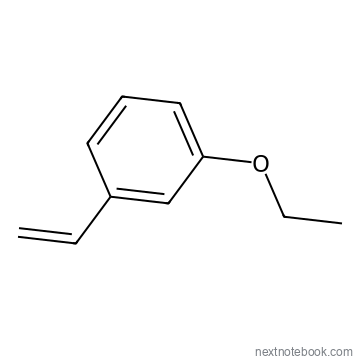 Tap an option to check.
Show answer
Correct answer: option 4,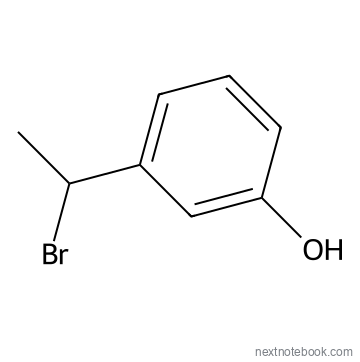
- Q45JEE Main 2024 · 5 Apr · Shift 1Identify compound in the following reaction sequence: chlorobenzene (drawn in the figure) +
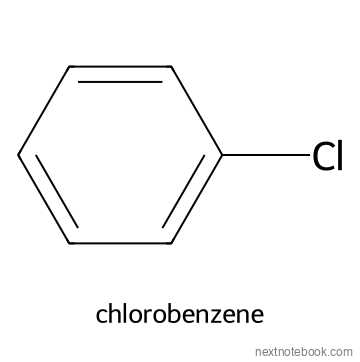 Tap an option to check.
Show answer
Correct answer: option 2,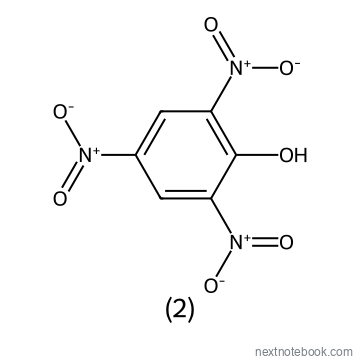
- Q46JEE Main 2024 · 4 Apr · Shift 2Common name of Benzene-1,2-diol isTap an option to check.
Show answer
Correct answer: option 2,catechol - Q47JEE Main 2024 · 27 Jan · Shift 1The ascending order of acidity of the group in the following compounds is:
(A) (butan-1-ol)
(B) 4-nitrophenol ( para to )
(C) 4-methoxyphenol ( para to )
(D) phenol
(E) 2,4-dinitrophenol ( ortho and para to ). The compounds are drawn in the figure.
Choose the correct answer from the options given below: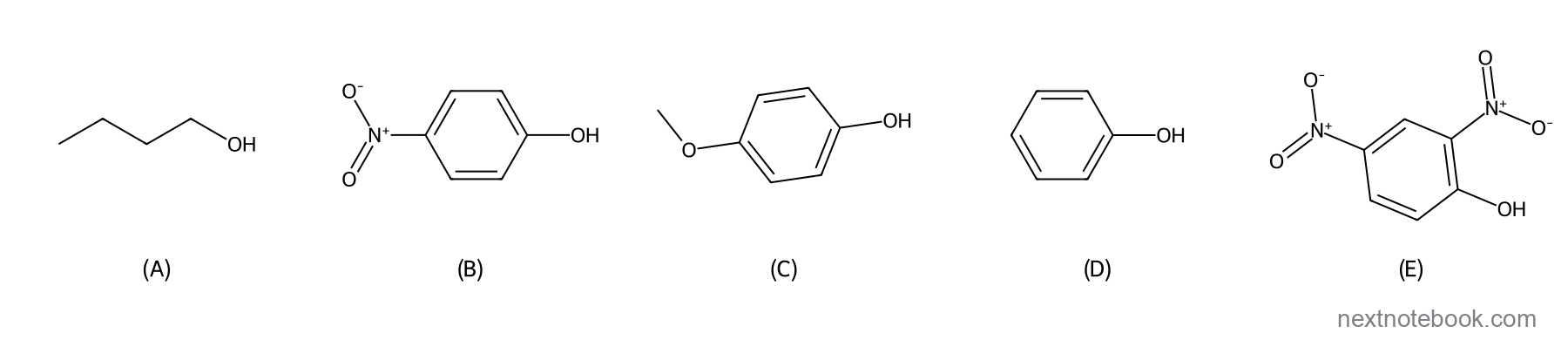 Tap an option to check.
Show answer
Correct answer: option 4, - Q48JEE Main 2024 · 9 Apr · Shift 2Match List I with List II: Choose the correct answer from the options given below:
List-I List-II (heading) (Cell) (heading) (Use / Property / Reaction) (a) Br2 water test (I) Yellow orange or orange red precipitate formed (b) Ceric ammonium nitrate test (II) Reddish orange colour disappears (c) Ferric chloride test (III) Red colour appears (d) 2,4-DNP test (IV) Blue, Green, violet or red colour appears Tap an option to check.Show answer
Correct answer: option 4, - Q49JEE Main 2024 · 8 Apr · Shift 2Match List – I with List – II
List-I (Reaction) List-II (Products) (a) aniline, (i) , (ii) , warm (I) 2-hydroxybenzaldehyde (benzene ring with OH and CHO on adjacent carbons) (b) phenol, (II) phenol (c) phenol, (i) aq. NaOH, (ii) (III) 2-hydroxybenzoic acid (benzene ring with OH and COOH on adjacent carbons) (d) phenol, (i) NaOH, (ii) , (iii) (IV) p-benzoquinone (cyclohexa-2,5-diene-1,4-dione) Tap an option to check.Show answer
Correct answer: option 4,(a)-(II), (b)-(IV), (c)-(I), (d)-(III) - Q50JEE Main 2024 · 27 Jan · Shift 2The final product A, formed in the following reaction sequence is: A (i) (ii) , (iii) (iv) , ether, then
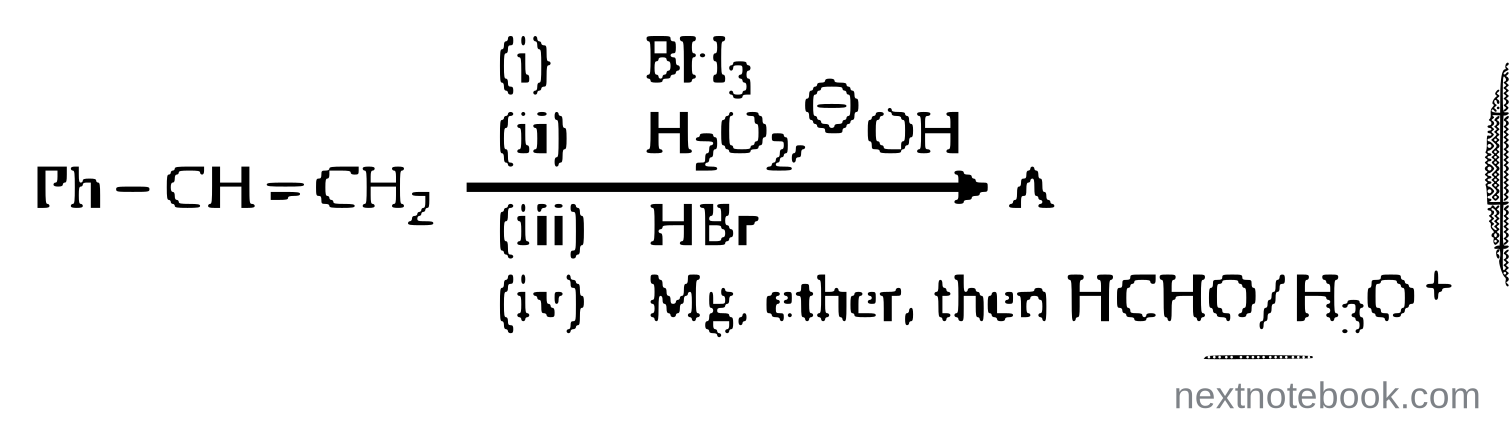 Tap an option to check.
Show answer
Correct answer: option 4, - Stuck on one?Log in free
See the step-by-step solution and video for every question, free with login.
- Q51JEE Main 2024 · 5 Apr · Shift 1Consider the given chemical reaction sequence: [benzene ring with OH] --Conc. --> Product A --Conc. --> Product B Total sum of oxygen atoms in product A and product B are______________.
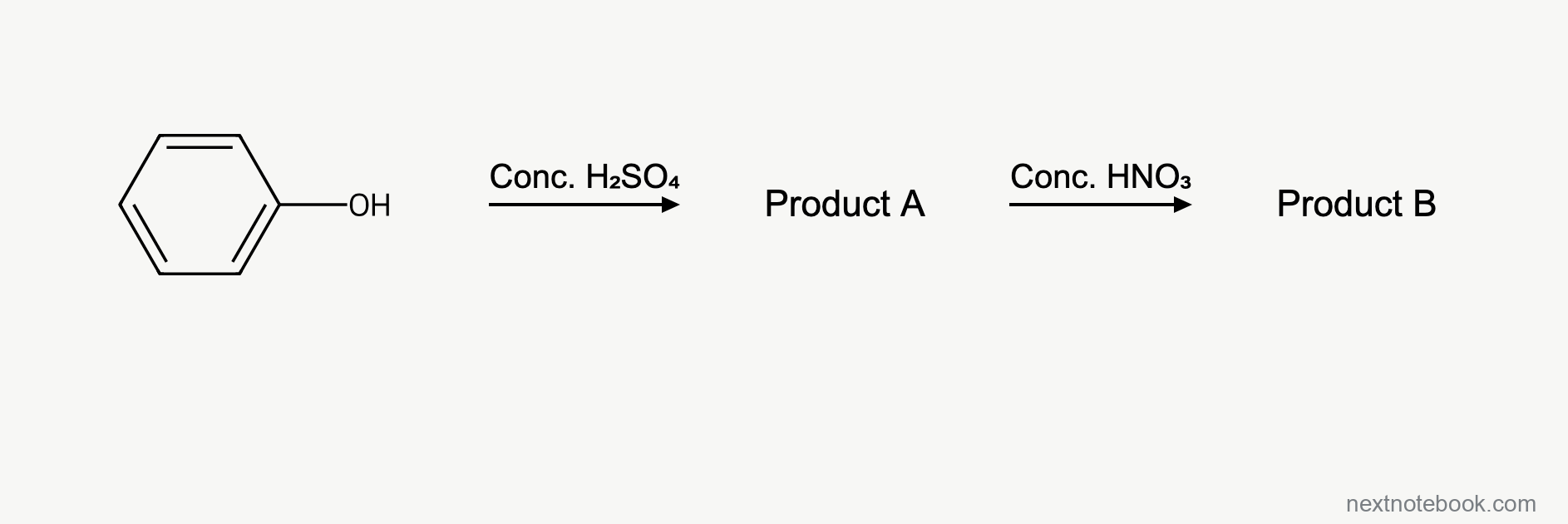 Tap Show answer to check.
Show answer
Answer: 14 - Q52JEE Main 2024 · 31 Jan · Shift 1The product of the following reaction is P. [benzene ring bearing and groups] The number of hydroxyl groups present in the product P is __________.
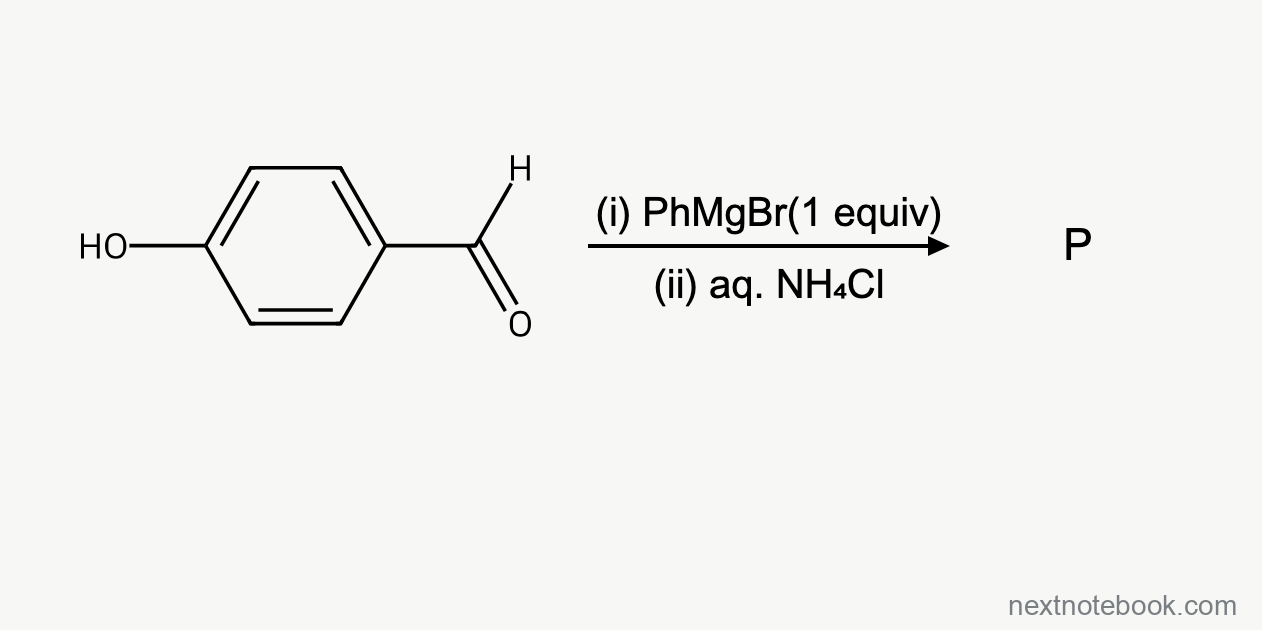 Tap Show answer to check.
Show answer
Answer: 1 - Q53JEE Main 2023 · 8 Apr · Shift 2A compound ‘X’ when treated with phthalic anhydride in presence of concentrated yields ‘Y’, “Y” is used as an acid / base indicator. ‘X’ and ‘Y’ are respectivelyTap an option to check.
Show answer
Correct answer: option 3,Carbolic acid, Phenolphthalein - Q54JEE Main 2023 · 25 Jan · Shift 1In the cumene to phenol preparation in presence of air, the intermediate isTap an option to check.
Show answer
Correct answer: option 4,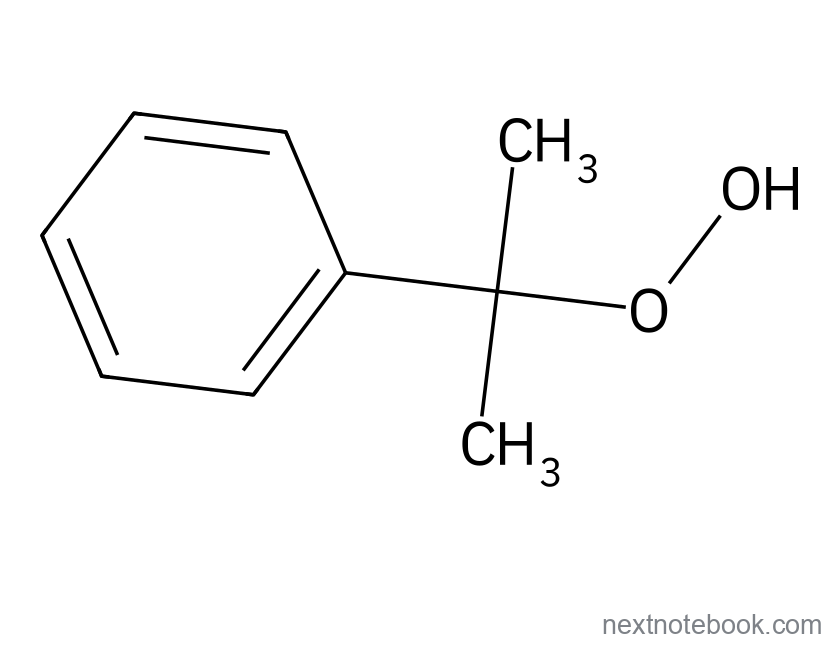
- Q55JEE Main 2023 · 11 Apr · Shift 2Thymol (2-isopropyl-5-methylphenol, shown in the figure) is treated with / to give , and then with / to give (major). Compound is
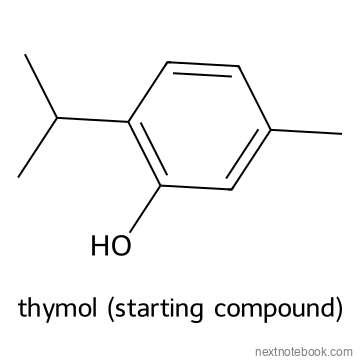 Tap an option to check.
Show answer
Correct answer: option 4,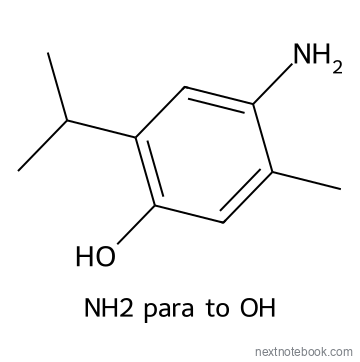
- Q56JEE Main 2023 · 13 Apr · Shift 1Cyclobutyl(cyclopentyl)methanol (drawn in the figure) is heated with (), giving the major product. In the above reaction, the left hand side and right hand side rings are named ‘A’ and ‘B’ respectively. They undergo ring expansion. The correct statement for this process is:
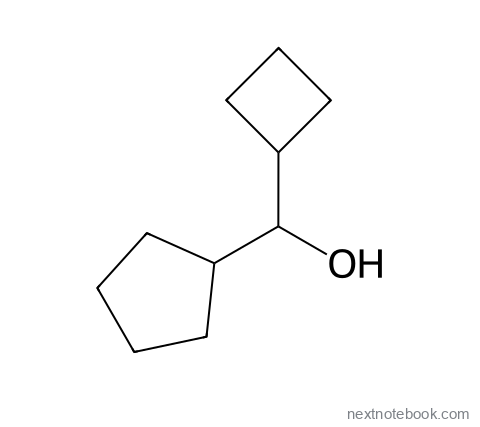 Tap an option to check.
Show answer
Correct answer: option 2,Finally both rings will become six membered each. - Q57JEE Main 2023 · 10 Apr · Shift 1Suitable reaction condition for preparation of Methyl phenyl ether isTap an option to check.
Show answer
Correct answer: option 3,, - Q58JEE Main 2023 · 31 Jan · Shift 2Which of the following compounds are not used as disinfectants? A. Chloroxylenol B. Bithional C. Veronal D. Prontosil E. Terpineol Choose the correct answer from the options given below:Tap an option to check.
Show answer
Correct answer: option 3,C, D - Q59JEE Main 2023 · 25 Jan · Shift 2Number of compound giving (i) red colouration with ceric ammonium nitrate and also (ii) positive iodoform test from the following is ________. The compounds drawn are (1) acetophenone, (2) 1-phenylpropan-2-ol, (3) ethanal, (4) butan-2-ol, (5) methoxyethane, (6) 2-phenylethan-1-ol, (7) 1-cyclohexylpropan-2-ol, (8) 2-cyclohexylpropan-2-ol.
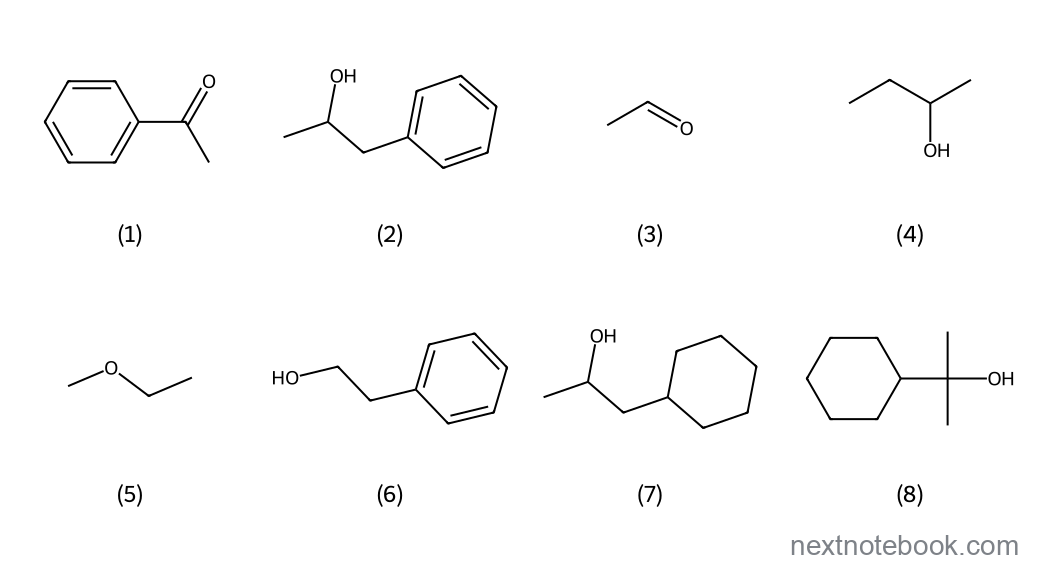 Tap Show answer to check.
Show answer
Answer: 3 - Q60JEE Main 2023 · 25 Jan · Shift 2Find out the major product from the following reaction. 2,6,6-Trimethylcyclohexan-1-ol is heated with concentrated ().
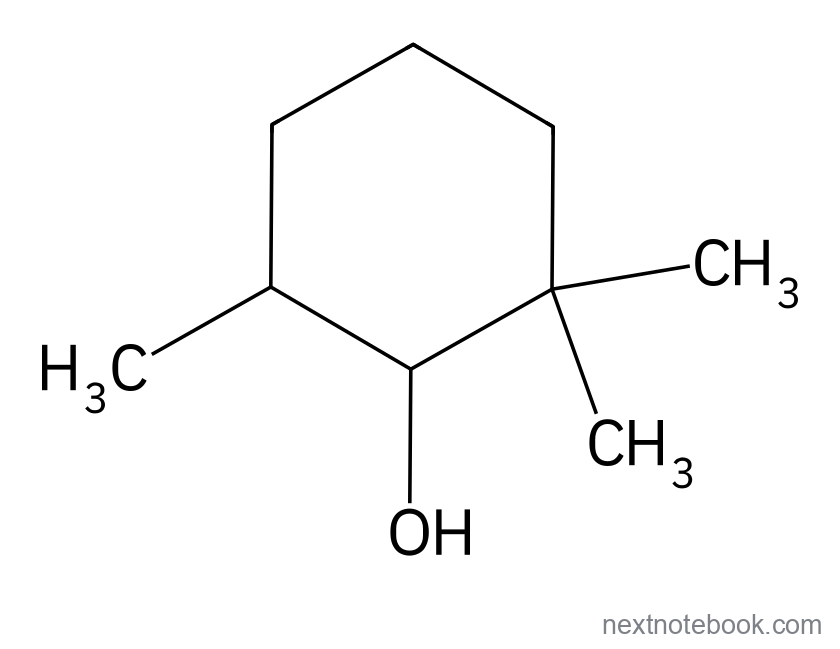 Tap an option to check.
Show answer
Correct answer: option 2,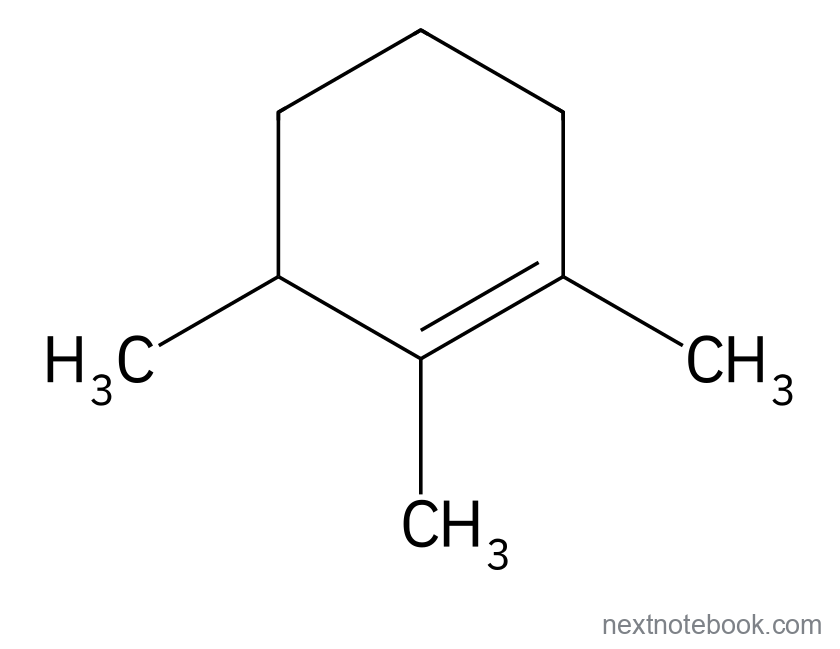
Showing 60 of 155 questions. The rest are free after login.
Practise Preparation of alcohols first. Solutions and video answers are free.